
Category Archives: Firearms

These are our BOOM STICKS!!!!

Ingenious Home Defense Rounds

by Woodsbum

Our family has been into firearms and reloading ammunition as long as I can remember. Somewhere in all those years I learned about some special pistol loads that our family loads up for self defense. It really didn’t dawn on me until discussing them with Gunguy that they were anything special or out of the ordinary. I essentially grew up with this specially loaded ammunition and has he says, “You take a lot of things for granted because of how you grew up.” Well, this post is for you Gunguy and I hope that it helps push you toward that crazy world of reloading.

Here are the interesting features of this round:

  • Great bullet expansion
  • Very little penetration – lowers the risk of bullets passing through the target
  • Low velocity so multiple shots are not as difficult
  • Inexpensive to load up and use compared to other “defense rounds”

Due to the huge influx of compact revolvers in .38, most of my family has adopted that round as their carry pistol. That is why I will discuss the speed and reloading specifications for this particular caliber. It is also important to note that these work best out of a revolver due to feeding issues in automatics.

With no further build up, here is my family’s adopted defense round:

.38 using inverted wadcutter

.38 using inverted wadcutter

As you can see, there appears to be a huge hole in the center of the bullet. This is how it would normally appear if loaded per factory intended:

Normal wadcutter load

Normal wadcutter load

To get this sort of hollow point looking effect, we load each .38 with 2.5 gr of Bullseye powder and just press the bullet in backwards. With this configuration we are achieving around 650 fps on the chronograph. The following picture shows a pumpkin shot with one of these rounds. I do not have any real desire to figure out any other numbers in regard to the ballistics so you are stuck with the “pumpkin desecration test.”

This is the entrance “wound.” Please note how the entire face of the pumpkin is cracked in various directions radiating outwards from the point of impact.

Initial damage to the pumpkin.

Initial damage to the pumpkin

This is where the bullet exited the pumpkin. Again, please note how the pumpkin is cracked.

Damage as bullet exited the pumpkin

Damage as bullet exited the pumpkin

For those of you wondering, all the other little holes are damage from a pellet gun and a couple .22 short. We decided to shoot it with the .38 after my son had already been plinking for a bit.

Considering this a low velocity round fired from a .38, this really packs a fairly large punch. Like I mentioned, however, the real benefits are associated with the minimum recoil and lack of penetration compared to other loads in that caliber.

For those of you who might not reload and don’t know what at “wadcutter” bullet is, here are a few more pictures. These first two show what the actual bullet looks like. The first one is how it would normally be pressed into the casing. The second one is the inverse side.
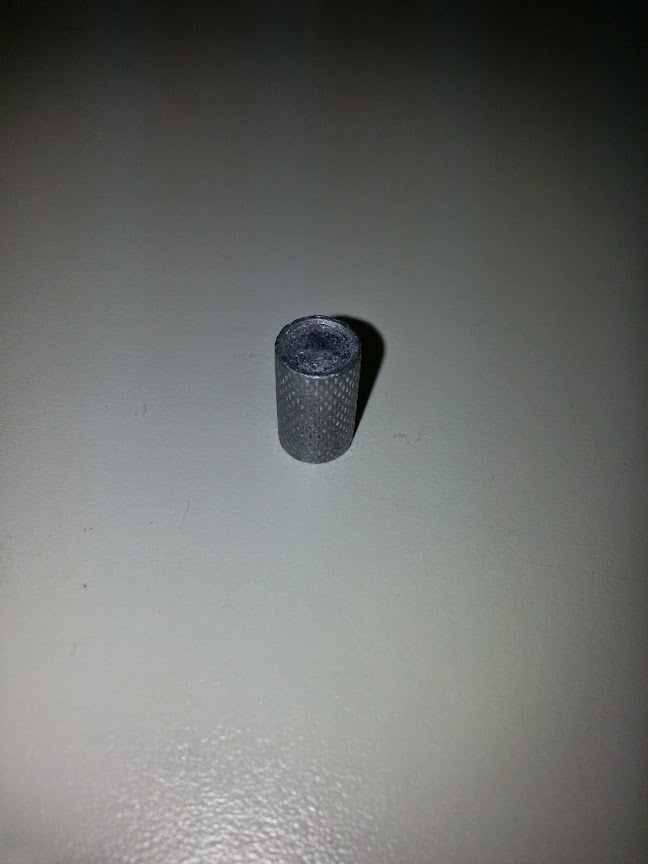
Wadcutter for .38
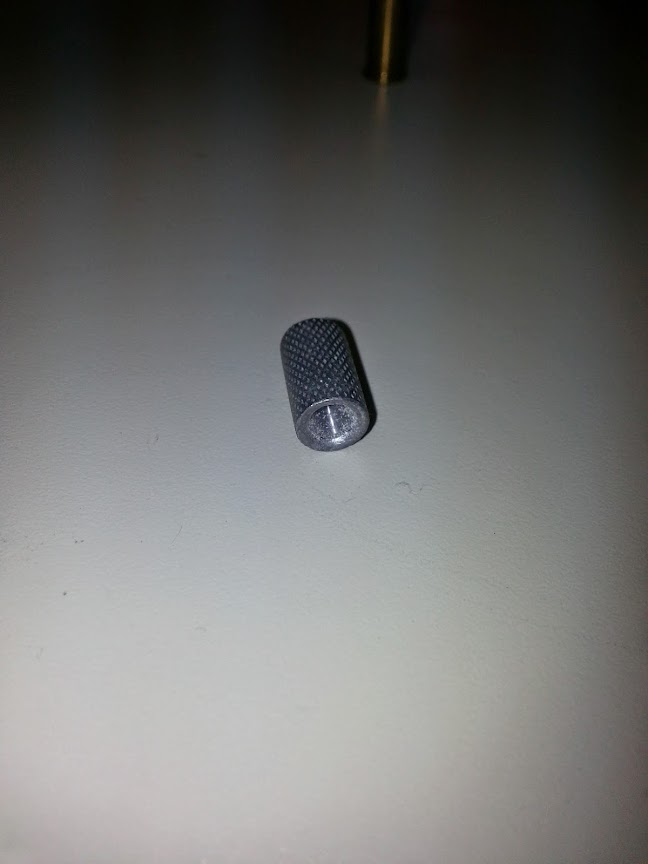
Wadcutter for .38

Back side of the wadcutter bullet.

Back side of the wadcutter bullet.

As you can see, it is not a jacketed bullet like most people are used to. It is a simple, cast bullet made of lead. The last picture I have is the bullet next to the loaded cartridge.
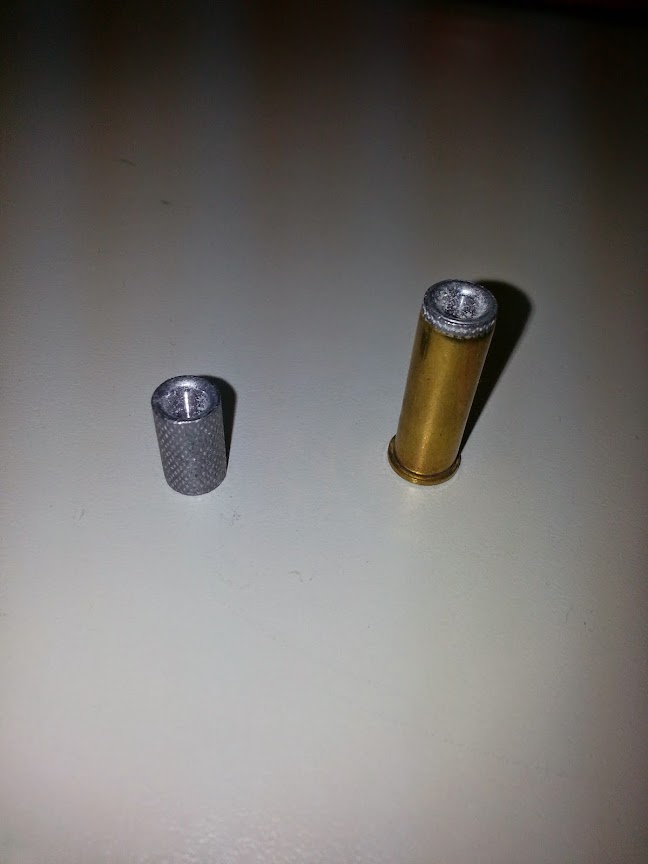
Wadcutter bullet and how it looks inversely loaded.

Wadcutter bullet and how it looks inversely loaded.

Now, I don’t expect the world to adopt this defense load or suddenly make this load one that is mass manufactured. What I hope that anyone reading this will do is start to think outside of the established norms. This goes for everything posted here at Age of Decadence. This is our main goal. Please look around, evaluate the older ways that worked effectively, and don’t be afraid to blaze your own trail. Let us know if you have any other tricks like this.

  • Share on Tumblr

Tactical vs Hunting – Stance and Form

by Woodsbum

After having taught numerous Hunter’s Education classes, hunted around those new to the sport, and worked with countless people that are getting ready to start hunting at the range, I have found that there is a definite pattern. Those students that have taken tactical shooting classes and stick to those stances are at a definite disadvantage in the field. The tactical stances allow for great forward and lateral movement. In a hunting situation, however, most movement is based around a pivot foot. The tactical stances do not seem to allow for that pivoting movement and thus limit the field of fire and flight tracking needed to be effective while hunting.

As a way to better explain how I came to this conclusion, let me give you several examples.

Example 1: Several of us went out dove hunting. All of us “old school” stance users had no problem in getting our limits within only a few hours. A couple of LEO were also out there and were using their “tactical” stances. They had no problem hitting the birds that were flying in line with the way that they were facing. When a bird crossed their path, however, they could not effectively track it without having to physically pick up both feet and move. The stance just was not effective when it came to that swing movement needed in bird hunting.

Example 2: Skeet shooting at the range. A couple of prior military and current LEO persons were just stacking the slugs into a target one on top of another. They were obviously quite proficient and had practiced this a lot. When the range swapped over to skeet, they were both completely unable to track the clay. Their feet were moving around so much that we started giving them a hard time. We told them to, “Quit dancing and just shoot the clay.” Both were less than 5/25 and they admitted that they were never able to get into a good position fast enough to shoot skeet.

Example 3: Working with new hunters in the field. It never fails that when I work with new hunters that those in the tactical stances can not hit flying targets effectively. One such outing I saw this guy hitting everything set in front of him with slugs or buckshot. Not issues. Once we swapped to bird shot and tossed something, he missed almost every time. Even when I tried to help him and correct his stance, the way that the arms are positioned in a tactical stance really hindered his ability to transition over to hunting type situations.

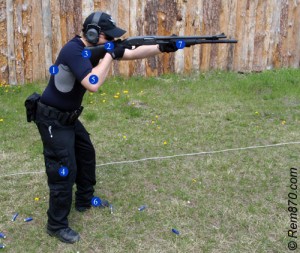
So everyone can see the difference, here is the stance I am talking about.
shotgun_shooting_stance_scheme

This stance is more squared off toward the target. Some people even square up completely with both shoulders completely perpendicular to the target. This disallows much twisting at the hips while keeping the firearm placed properly on the shoulder. It also does not allow for decent twisting motion because you weight has to be evenly distributed. You have to shift your weight, move a foot, and then redistribute your weight. Even the LEOs that I saw had to make that same movement to try and track objects flying across their path. This made their “swing” that is required for leading flying birds uneven and jerky.

A more traditional hunting stance is more like a boxer’s stance.
ch7_015_NJ

This stance allows the hunter to simply transition their weight to either foot and spin on the ball of their foot, thus smoothly tracking the animal during flight. Think of the movements that boxers make. Their movements are smooth, quick and they can easily track their opponent.

Now I know that not all people bird hunt or will bird hunt. The principle holds true with all types of game, however. The tactical stance disallows for decent twisting or sweeping type movements where game crosses your path. The hunter would have to twist more at the knees than waist for those wider, sweeping motions. Having witnessed it first hand on multiple occasions, it really is a difficult maneuver to properly sweep smoothly.

Here is your test: Pull out your trusty firearm and try it yourself. Get into one of the many tactical stances that are taught. Square your shoulders up so that your chest plate properly covers your vital organs in case you are hit. Then try and move in all the manners required while hunting. You will quickly agree with me that you suddenly become like a rook on a chess board. Great forward, backward and lateral movements, but you will have little sweeping movement. Next get into that boxer type stance that us “old school” hunters use. There is very little decent movement allowed except for sweeping motion. Forward and later is more of a crossover step or a shuffle. Not very effective for finding cover, but great for tracking game.

This leads me to my final conclusion: If you are a tactical type guy, have fun. Do your thing. If you do the tactical stuff for those SHTF type situations (prepper type stuff), you really need to include some hunting type education to be well rounded. Hunters in their “old school” stances are not going to be running up on something while firing. It would be more of a move, fire, and then move type situation to be effective. Either way, learn both and become effective with both ways to fire your weapons. You never know when you might have to adopt that goofy looking target stance to shoot a deer out at 700m while standing…..  Now there is one more to learn, so get out there and practice PEOPLE!!!!

  • Share on Tumblr

LaserLyte Kryptonyte Green Lasers

by Woodsbum

Well, I have been depending on Gunguy to put up posts for me as of late due to some SERIOUS house modification/renovation taking place. By “taking place” I should reference the fact that I am doing it all…. A few friends and relatives have kicked in, but the time on my roof and slinging nails wildly takes away from my ability to get out and give you any new bushcraft type posts. I have, however, had the opportunity to install and play around with a few really nice items that I procured recently.

Enter the LaserLyte systems that I picked up for my wife’s and my AR15’s. I picked up one of the LaserLyte Carbine Green Laser Systems for my wife and I got one of the LaserLyte CM-15 Center Mass Kryptonyte Laser Sights for myself. For the list price versus the actual price, I was a bit concerned as to the quality of the laser. When they arrived, I was even more concerned because the packaging was not what I expected. It was in a simple plastic package that made me a bit more skeptical as to whether I had spent my money wisely. For $300 list price, I was expecting a box at least.

When I took it out of the packaging, the quality seemed much better than I begun to fear. The unit is solid and actually looks like it will take some abuse, but I doubt it is on par with a Vortex scope. Only time will tell on that one. The installation is quite simple and I found that the screw on covers for the adjustments do feel sturdy and of decent quality. I was, however, a bit annoyed that sight adjustments must be made with an Allen wrench. They do supply the correct size, but it is going to make field adjustments that much more difficult if I have to keep track of a small Allen wrench.

Both models are the same quality and have, thus far, not had any problems with being bumped around and dropped repeatedly after installation. While I still had a warranty, I wanted to see how durable they actually were before I got to the point where I would depend on them. Again, they are surprisingly durable.

In regards to the important part, the laser itself……  Wow. The carbine laser is very easy to see and is dead on accurate up to the 100 yards that we tested it at. The “Center Mass” one was not as visible and is definitely built for a shotgun. The pattern is very sweet, however. I will be replacing this with the Carbine model for my AR and putting the Center Mass on my Mossberg 500. That should be fun.

Laser Pattern for Center Mass

Laser Pattern for Center Mass

Several reviews from Amazon have stated that they quality was not worth the money and the laser system breaks after only a few rounds. We put 7 30 rounds magazines through each of our rifles. The sight did not deviate from where it was originally set, there was no cutting in or out of how bright it was, and there did not seem to be any issues to speak of. We will keep our eyes on the sights and make sure nothing bad happens. If it does, I will post it and link to this post.

All in all, the reduced price for this laser makes it worth the money. I don’t think that the original list price makes this a decent value, but around the $150 mark it seems reasonable.

  • Share on Tumblr

PTR-91 Scope/Mount Combination

by Gunguy

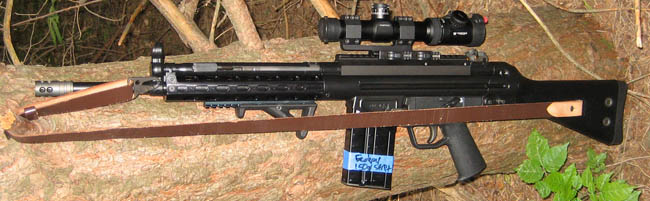
Several people have asked what kind of scope and mount combination I have been running on my PTR-91 since I put up pictures with a previous post. I decided to put a Low Profile Rail Scope Mount on my PTR-91 instead of a STANAG Steel Claw Mount to keep the scope as close to the rifle as possible. I then mounted a MOA Vortex Viper PST 1-4×24 scope in a ADR-X 2 inch Offset Cantilever Ring Mount.

The above combination is rock solid and very accurate. It was rather costly but worth every penny. The scope and mount were an investment and I can use them on different rifles in the future if I ever decide to sell my PTR-91.

ptr_91_scope

  • Share on Tumblr

PTR-91 Firing Issue / Ammo Sensitivity Update

by Gunguy

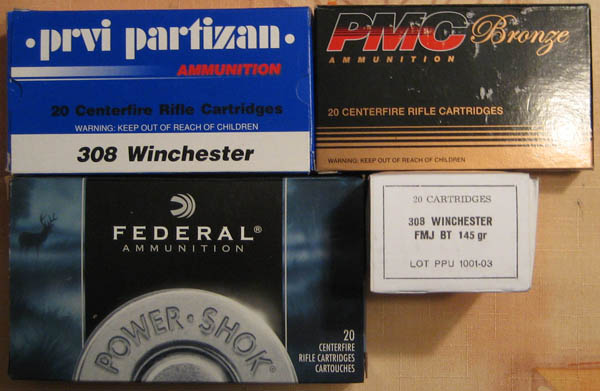
I took the PTR out for several of hours of shooting. I tried making the test as controlled as possible so I could make up my mind if I should keep the rifle or not. I bought 20 round boxes of five different types of ammo. I listed them below and how many failures I had while I fired off a magazine of each. Please note that I only put 19 rounds in each magazine.

  1. 308 Winchester Federal Power-Shok 150 Grain Soft Point- No Failures. My Ptr-91 loves expensive hunting ammo.
  2. PMC Bronze 308 / 7.62 Nato- One Failure even though previously it would not fire more than one round at a time before failing to fire the next round. I attribute this to getting the rifle broken in. If anything changes I will let you know.
  3. Prvi Partizan M80 145 grain FMJBT 2009 Production – My PTR-91 absolutely hated this ammunition. It only fired the first round and then failed to fire the second. After racking another round it failed to fire that round and the next. After that I had a triple feed bloody mess and I gave up on the ammo.
  4. Prvi Partizan .308 150gr Soft Point – After the previous experience I did not expect much from the PRVI 150 grain soft point. This ammunition fired flawlessly like the 308 Winchester. The commonality between the two types of ammo is that they are both manufactured as civilian .308 and not military 7.62. The PTR is manufactured to use 308 and not 7.62 so that makes sense. Hopefully once the rifle is broken in it will take all types of ammo.
  5. Australian 7.62 surplus ammo – I didn’t have a link because I traded my friend some of my PMC 308 for the ammo. The Australian surplus had only two failure to fires but the rest went off without a hitch.

In summary the PTR-91 is a finicky rifle when it comes to ammo. I’ve only put two hundred rounds through it so it’s not broken in yet. I bought the PTR-91 because H&K G3’s are not available and H&K 91’s are hard to come by. In hindsight I should have bought a DSARMS FAL. I’m going to stick with this rifle for the time being but I would not bet my life on it.

ptr_91_scope

308_ammo


  • Share on Tumblr