
Author Archives: Woodsbum

N.A.A. Wasp – My Noisy Cricket

by Woodsbum

For many years, I have carried some form of compact semiautomatic pistol. Originally, it was a Glock 30 (not very compact, but small enough to carry and pack a punch). After I found that the Glock was too big for my liking, I moved over to an old Smith and Wesson SW9. Eventually the firing pin spring wore out and the factory replaced it with a M&P Shield. Now, I still carry this quite often. There is a problem with the size of this pistol, however. It is nice and compact compared to most pistols, but it still tries to pull my pants down when I wear workout clothes and still tugs a bit in a cargo pocket. I was to the point where I was actually getting annoyed.

Then I found the North American Arms mini revolvers. I call it my Noisy Cricket after the MIB movie pistol:
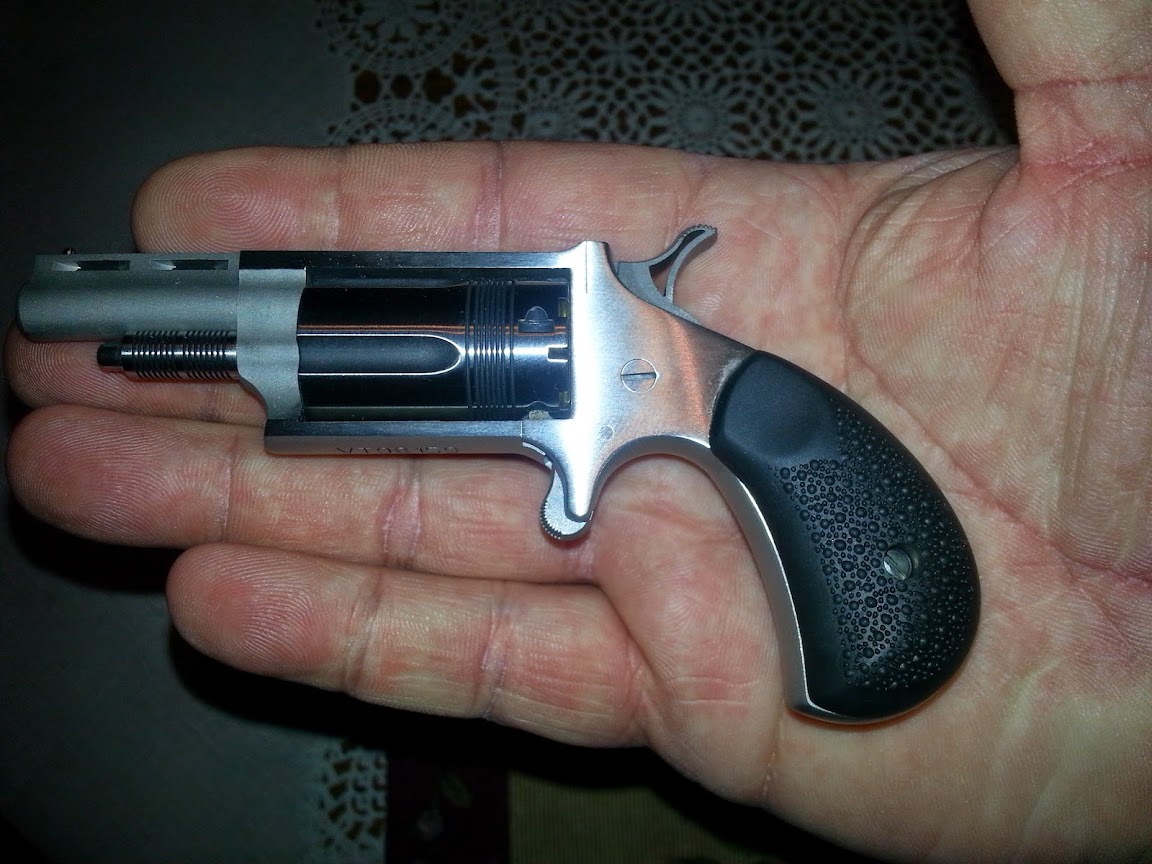
NAA Wasp

NAA Wasp

This little guy comes with two cylinders so that I can shoot either .22LR or .22WMR ammunition with it. The cylinder comes out by pulling the pin under the barrel. This is also how you reload it. The design does not allow for reloads while the cylinder is still in the frame.

For a better frame of reference in regard to size, here is my Wasp pictured next to a 30-30, a 45-70 and a .44 mag cartridge.
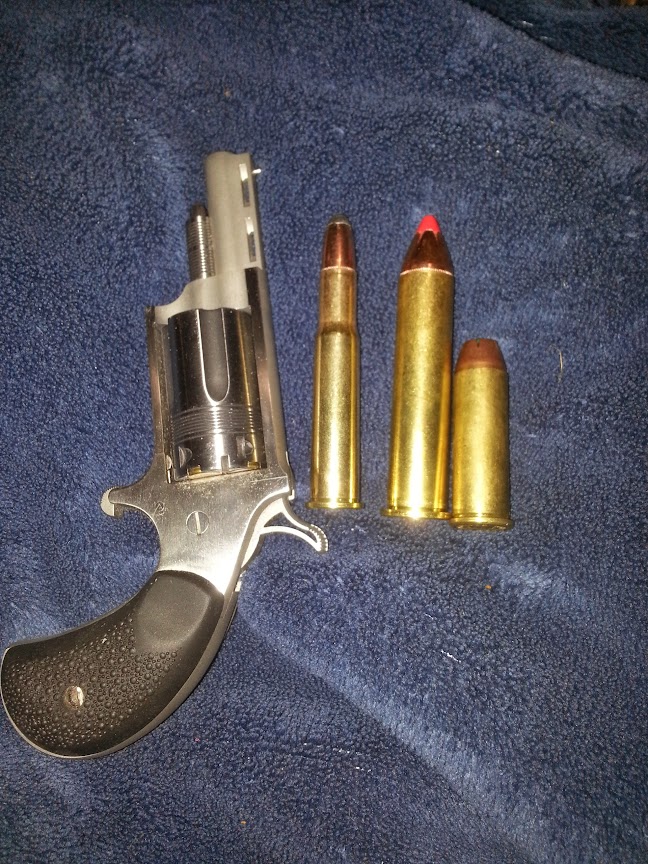
NAA Wasp next to 30-30, 45-70 and 44 mag

NAA Wasp next to 30-30, 45-70 and 44 mag

As you can see, it really is not much bigger than having a set of truck keys and work keys in the same pocket. The design also makes is safe to carry the cylinder completely loaded. There is a notch between the rounds that the hammer fits nicely into. This locks the cylinder and prevents accidental discharge of the pistol while bouncing around your pocket. I have always been an advocate for carrying any firearm with an empty chamber, so this feature really struck me as well thought out. I do carry revolvers with all chambers filled, but put the hammer down between cartridges in a similar manner. This design locks the cylinder and disallows the pistol from accidentally rotating to an unspent round. Very nice job, guys!

Now for how it shoots…..  I am not as spot on with a camera, so I never remember to take pictures of my targets after I shoot them. This may also be due to the fact that I usually don’t use paper targets when plinking. Either way I am stuck just telling you how it performs, so if you want to see actual “proof” you will have to find one to play with.

With the .22 WMR rounds, it was dead on accurate. Where the pistol was pointed was exactly where the round hit. The sights are similar to how you aim a shotgun for there is no rear sight. You basically put the bead on your target and let ‘er rip! Using Mini-Mag .22 LR also resulted in the same accuracy. I was shooting Dr. Pepper and RC cans at 25 yards with this little guy…..  Then came the standard velocity rounds. Oh, boy. I would have been better just throwing the rounds at the cans. It didn’t shoot a grouping, but more of a pattern. It was a pattern of a drunk, blind person wearing mittens. It was HORRIBLE. I used Remingtons, Winchester, CCI and Federal standard velocities in several different grain weights. Nothing worked to pull the accuracy back into a grouping but the CCI Mini-Mags. I did not try Stingers. Mainly because I didn’t have any.

The NAA pistol is really a great pocket pistol. With the right ammunition it is very accurate and .22 WMR is truly no joke round. There are also many accessories for this little guy to include flip handles with clips and belt buckle mounts. Considering the price and fact that this little guy gives you the ability to carry even when working out, swimming, or wearing anything that will disallow normal concealed carry without printing, NAA has got a real winner. I consider this one of my best firearm purchases and am now recommending that all my friends get one.

  • Share on Tumblr

Batoning – “You did WHAT with your knife?!?”

by Woodsbum

How long are people going to argue about the viability of using a knife for fire preparation? It makes NO sense to me why this is still an argument……..

Let me being with the back story before my rant:
I was down in Texas for the better part of last week. My plane landed a little after 1800 (6 pm) and I got home around 1900 (7 pm). The son, the daughter and the daughter’s boyfriend were outside. A fire in our fire pit was in the works. Like usual, my son was out there with his Primitive Edge bushcraft knife batoning and feathersticking away. Some jerk had stopped to give him hell about using his knife in such a “disrespectful” manner. This guy then felt the need to start in on me about how ill taught my son was and how I should have put him in the Boy Scouts so that expert outdoorsmen such as himself could have taught my son correctly……….

Again, I ask why people argue about the use of knives in fire preparation. When you go online and do a search for using a knife to baton wood, you will get tons of results where anyone that batons is called names. These same people will quickly turn around and use the same knife they won’t baton with for making a feather or fuzz stick, however. This makes no sense. If you can use one knife for cutting and stripping wood, why can’t you use it to make smaller strips of wood by batoning? Better yet is when they pound the wood onto the ground or a rock with the knife being used as a splitting maul. When the wood splits, they quite effectively slam their knife into the rock. Again-again, I wonder why that is a fine use of a knife when careful batoning is not.

For those of you who do not know what batoning is, please let me explain. Instead of using an axe to split wood, a knife is used and another piece of wood is used to hammer the far end of the knife so that the blade travels down the length to split it. This is most commonly used in split wood fires to make very small pieces of wood for kindling. Once the small pieces are done, you use the same knife to make feather/fuzz sticks.

Many of these self proclaimed “experts” in outdoors “survival” have a tendency to use military survival training as the basis for everything that they know about living in the bush. They will buy those mylar emergency blankets and expect that to keep them warm if a situation crops up where they get stranded. They will also carry some Rambo knife that is not even full tang and think that this fighting knife is a survival knife. What really needs to happen is that they need to understand that “survival” and “bushcraft” are two completely different things. If you can thrive in the woods, you don’t need to “survive” in the woods. You can carry less and be comfortable for the wild will provide.

Maybe they need to research this guy:

Mors Kochanski

Mors Kochanski

The picture is of Mors Kochanski. If you don’t know who that is and are spouting off about batoning a knife, you have serious issues……..

Here are some links to an interview with Mors.

As you can see from the interview, he is considered the modern “Grandfather of Bushcraft.”

Why do I mention him? He teaches and preaches the importance of being able to baton with your knife. It is one of the many lessons that he harps on as a basic skill for outdoorsmen.

If you are not as well versed in bushcraft and believe people like Dave Canterbury more, even he batons his knife.

If you don’t believe them, then how about this?

The reality is quite simple. People use tools to complete tasks. A good bushcraft knife is simply a tool. Just make up your mind as to which tool you like best. Whether you use a knife, hatchet, machete, cleaver, axe, or any other tool you choose, the final result is really the only true way to evaluate the effectiveness or value of the tool. In the case of a skilled woodsman using any of the previously mentioned tools, they are all effective.

  • Share on Tumblr

Reloading in the Bush

by Woodsbum

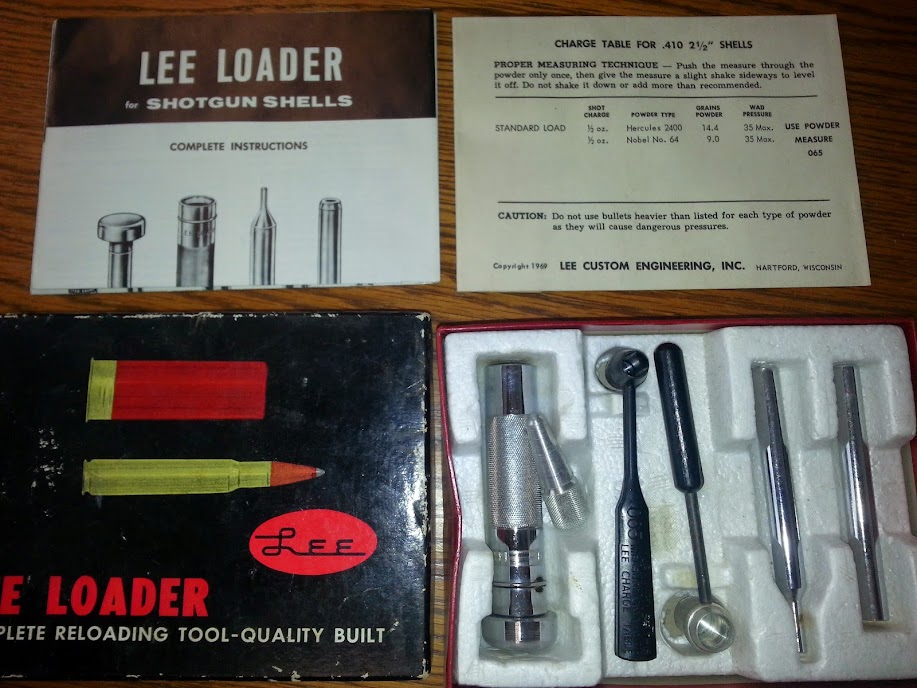
For many years our family has used the old school Lee Loader to reload .410 shells. We really didn’t think too much about it until someone saw the little setup we had and was amazed. This little loader allows you to literally reload your .410 shells out in the field if you wished. You are not tied down to a reloading bench and all sorts of permanently mounted equipment. Other than the kit you only need a hand priming system and a small wooden mallet.

This is the loading kit I am referring to:

Lee Loader

Lee Loader

This got me to thinking whether other field type kits were available still or if I was stuck looking for older gear if I wanted something else. A quick search came up with the following results:

.308 Hand Loader
9mm Hand Loader
.38 SPL Hand Loader
.223 Hand Loader
30-06 Hand Loader

These were just a few of the calibers that were available. I didn’t feel like over linking this post, so just click one of the links above and do a search for your specific caliber.

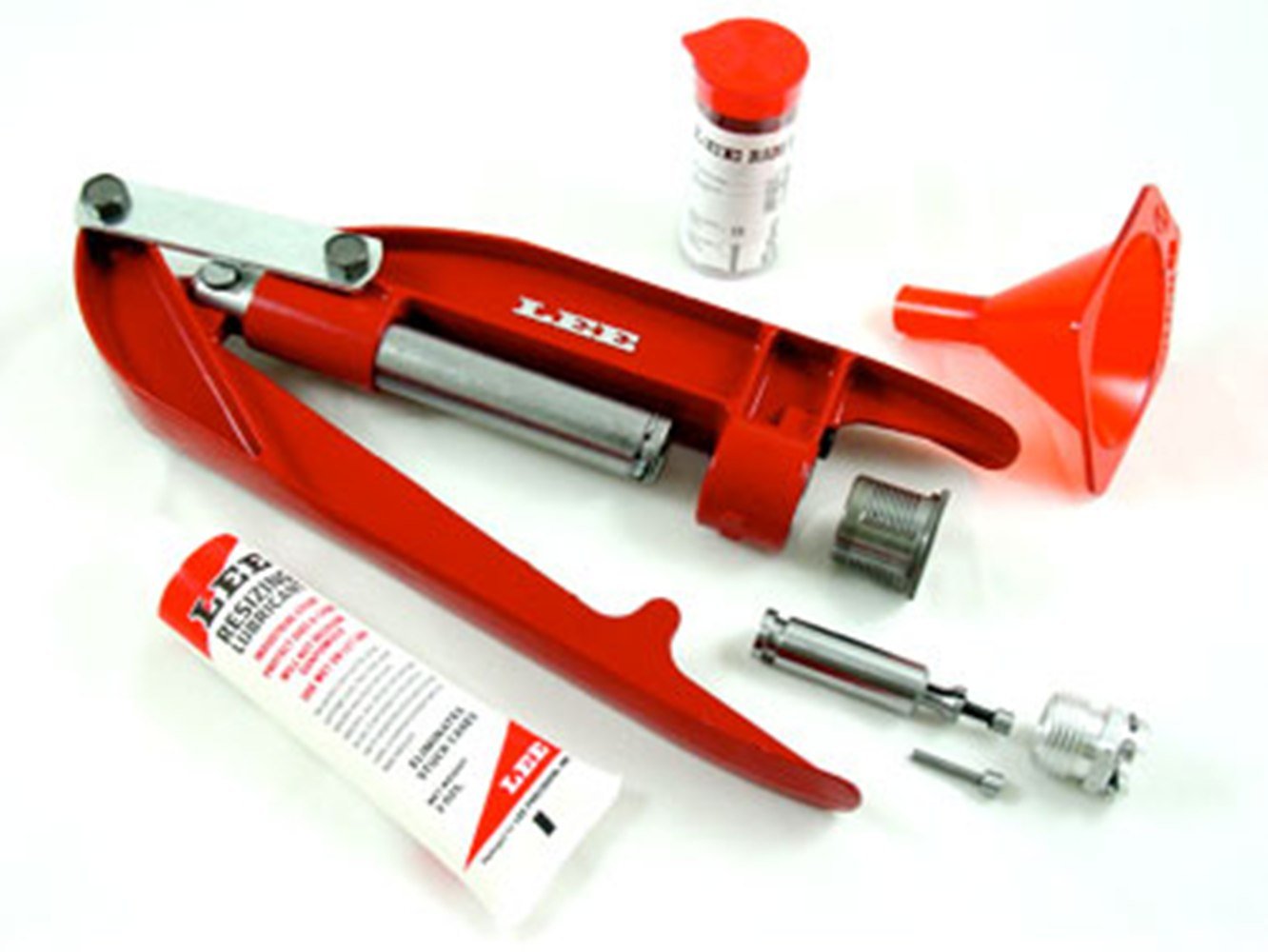
There are also other items that are available to assist if you are setting up to reload in the field. Lee also makes a hand press that will allow you to use your normal dies. It just requires you to strong arm the lever rather than having it bolted to a table. Of course it is also single stage and not progressive, so you wouldn’t want to fill AR15 magazines with what you are loading by hand. It would work well for a SHTF situation or if you had to rebuild some loads with a different bullet weight while in the field for instance. Here is the kit.

Lee Hand Press Kit

Lee Hand Press Kit

Some other items that might be handy if you decide to set up for reloading in the field would be the powder measure kit and maybe some sort of scale to ensure you are getting the right loads.

Even though this might seem a bit extreme just think back to the end of the 1800’s and early 1900’s. Most sportsmen would have similar setups that they took with them to reload as needed in the bush. Factory loads were expensive and had some problems with reliability depending on where you lived. If they were able to reload their hunting loads and pull off the shots that they did, why not take a look at grabbing some equipment for yourself. You don’t have to get a $700 Dillon or Ponsness Warren setup to reload. People like Billy Dixon were able to pull off almost 1 mile shots with their loads. I don’t think that is too bad with an old 50-90 Sharpes, so think how well some simple gear and practice could do for you and your .270.

Here is a video that shows how to use the Lee Hand Loader.

  • Share on Tumblr

Bridgford Ready To Eat Sandwiches

by Woodsbum

Today’s post is near and dear to my heart. It is about food. I love food and love food that is able to be stored for long periods of time, be easily transported, takes no real preparation before consuming, and ACTUALLY TASTES GOOD. Enter the Bridgford Read to Eat Sandwich.

This sandwich package was about $6 for two wrapped breakfast creations. There are tons of different varieties, but this was what we tried first. I figured that anyone who could make a French toast sandwich in a shelf stable form that tasted decent was on to something. Now I have eaten MORE than my fair share of MRE’s while in the military. Many were barely edible, but some were pretty good. The most current batches are actually downright tasty. If Bridgford is able to tap into any of that tastiness for their product, these things might be a winner…..  Now for the opening and testing.

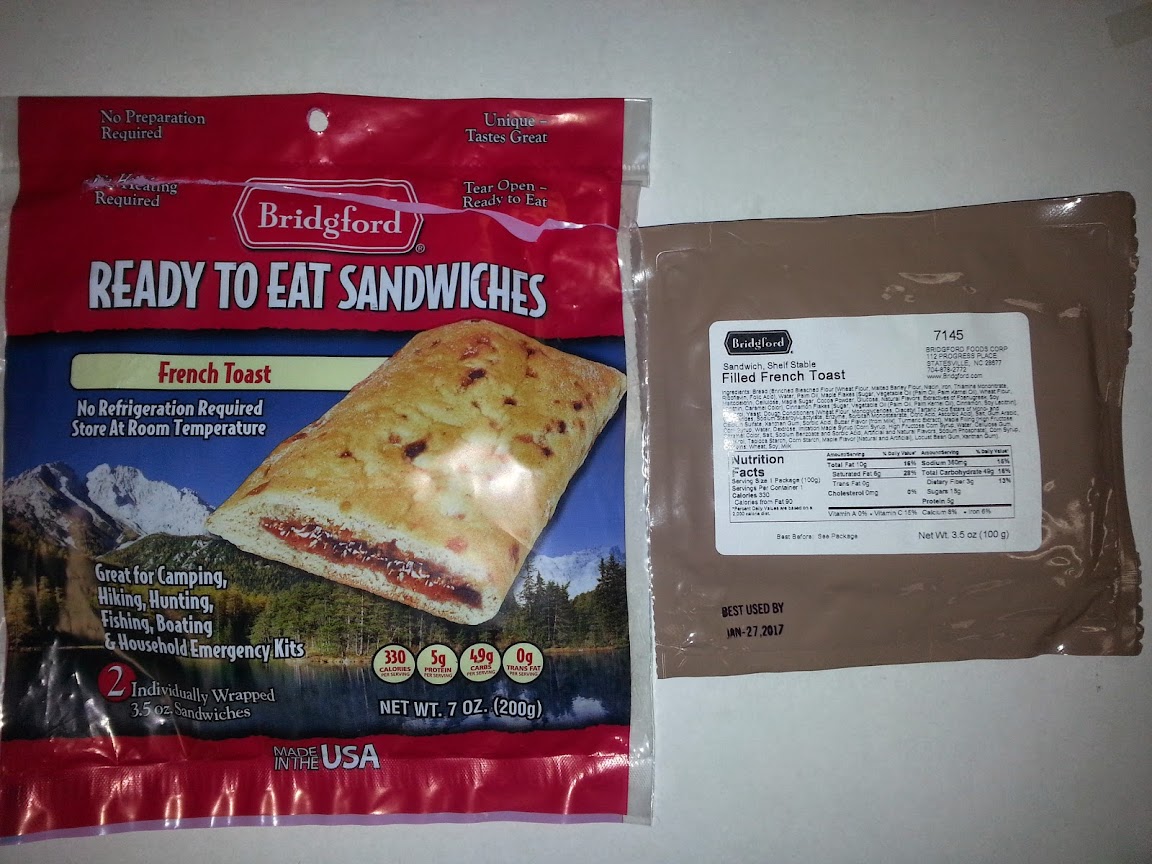
This is how the sandwiches are packaged. Two of these tan wrapped sandwiches come in each plastic bag.

Bridgford Sandwiches

Bridgford Sandwiches

The foil wrappers are just like MRE wrappers and open exactly the same. As a nice change, however, there is nutrition information on the side if each sandwich. It also makes it nice to be able to figure out exactly what you are eating. Makes me wonder what the “4 Fingers of Death” (Beef Frankfurters) MRE really had in it….  Hmmmmm……

Nutrition Information

Nutrition Information

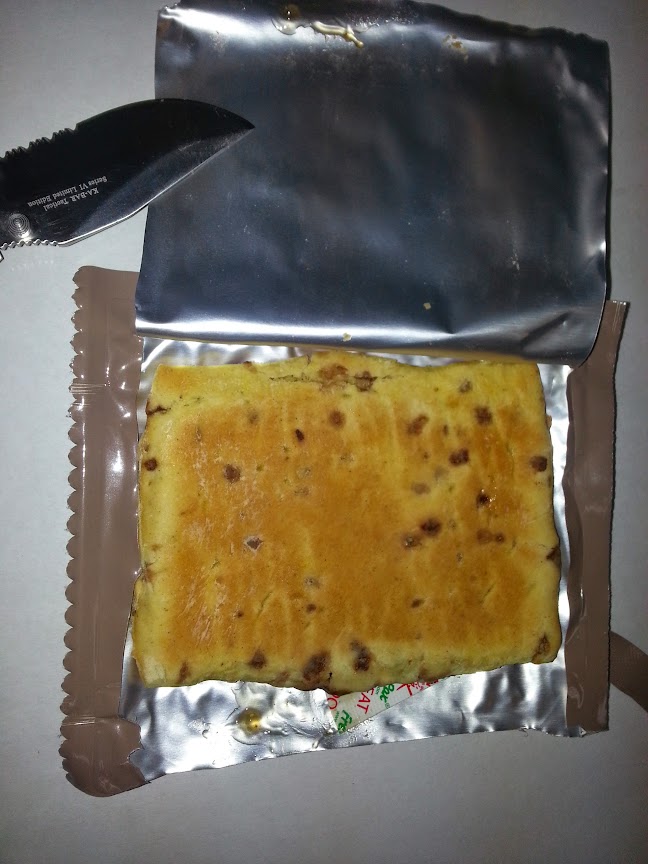
The actual sandwich look very reminiscent of the old MRE maple nut cakes. It also had that same smell, which definitely brought back memories. Here is what the look like with the wrapper pulled back.

Unwrapped

Unwrapped

The taste was also very similar to the MRE maple nut cakes, but a bit more sweet due to the syrup. All in all, they were not that horrible. As a primary source of food on a daily basis you could not run fast enough to get me to eat one every morning. As an occasional meal while out in the woods or in a SHTF type situation, you bet I will be back in line for seconds. On my “Tastiness Scale” I would give it about a 6/10. As a matter of reference I consider my tuna casserole 1/10 and my prime rib a 10/10. This fits in around the BBQ chicken area of the chart.

I am actually looking forward to trying out several more variations of these sandwiches. If they can make the French toast into a shelf stable variant that tastes this good, their Italian and BBQ versions must be incredible.

  • Share on Tumblr

A Good Video about Friction Fire

by Woodsbum

It is really hard to find a good video about friction fire. Most don’t really go too much into wood selection other than giving you a list of “wood combinations” that work together. This video shows you the finger nail test and explains how to check to see if the wood is actually dry enough to use.

Another couple of points about this video:

  • He uses the spindle to create a good socket in the hearth (fire board). Good technique that most “experts” online do not do.
  • He also checks the dust after he creates a socket. The color and consistency of the dust will help you figure out how well your spindle and hearth will work.
  • It isn’t too obvious in the video, but using the initial dust from creating your socket will help you get an ember quicker. I assume that he did that considering he piled all the remaining dust on top of his ember to keep it going.

Here is the video:

How to read the dust:

  • Light brown and lighter dusty dust means that you are going too slow or there is not enough friction. Try going faster and pressing down a bit more. It could also mean that your wood choice was too soft.
  • Light brown and fuzzy type dust means you are just shaving off pieces of the wood and not actually getting any heat. Go faster. The dust will get darker and be kind of fuzzy in appearance as you get closer to the right combo of technique and wood.
  • Dark brown almost black and fuzzy dust is what you are after. This is the perfect combo so look for embers burning in the dust.
  • Dark brown/black that are almost like little rolls of wood means that you are possibly going too fast and not pushing down hard enough. The wood dust is more like shavings that are not keeping enough heat to burn.
  • Dark brown/black that is almost a crusty or already burned looking means that you are going too fast or pressing down too hard. It could also mean that your wood choice was of a type wood that was too hard.

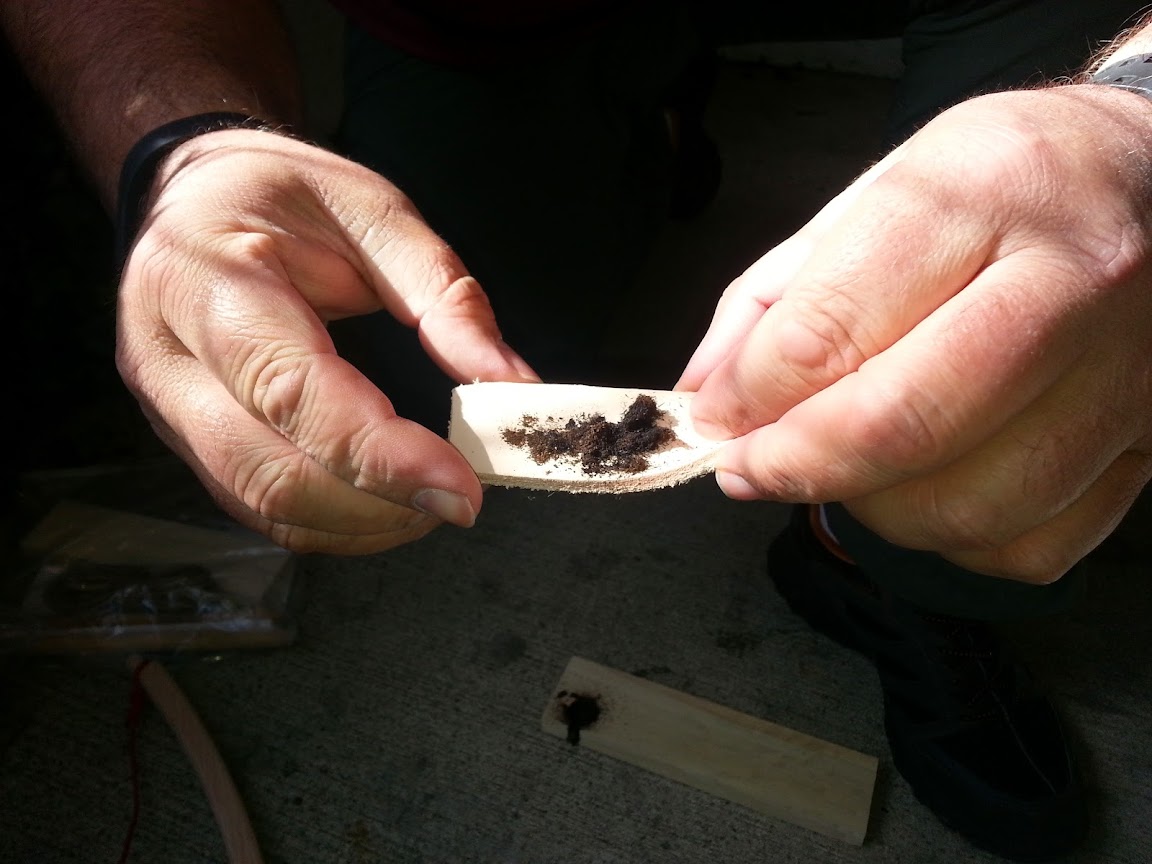
This is perfect dust:

Perfect dust from friction fire

Perfect dust from friction fire

There are many different charts out there on what type of wood works best. The big thing is for you to test out several combinations and get used to testing the wood’s density with your fingernail. It has to be able to dent it without a massive amount of pressure, but it should not break or crack under that pressure.

Keep trying  different wood types from your area to get that perfect combination for you. Technique plays an important factor as well. I can get the softer woods like pine and cottonwood going, but fail with maple and cedar. It really comes down to what works for you.

Good luck and have some fun!!!!

  • Share on Tumblr