Author Archives: Woodsbum

The H60 Firestarter

by Woodsbum

Being a complete gear freak has its benefits at times. I ran into a phenomenal piece of gear that I feel needs a post. During an outing with several BushcraftUSA members, I saw the absolute best firesteel I have ever seen. One of the people there works for a company that builds and sells the H60. It is absolutely incredible.

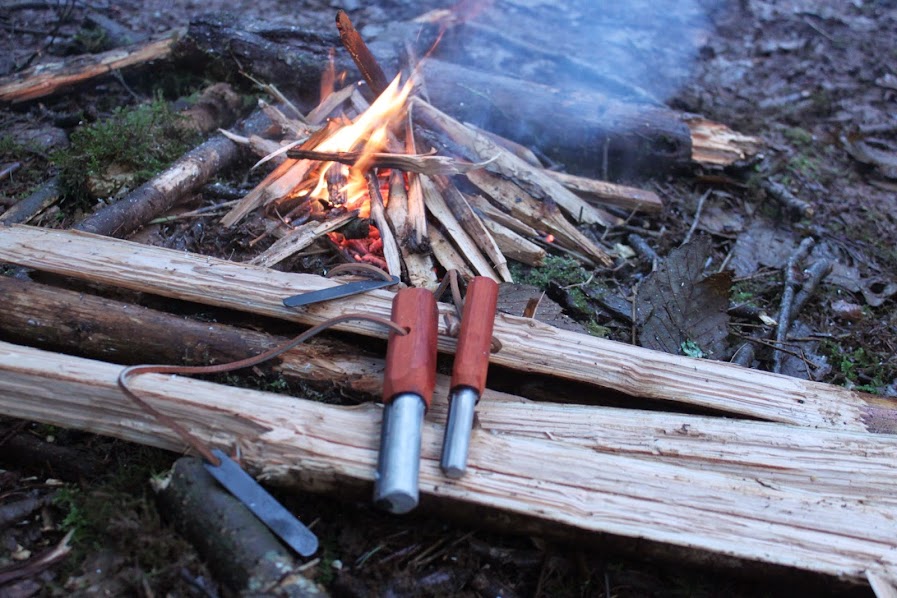
Let me start off by telling you a bit about the H60 itself. Here is a picture of what they look like.

H60 Firesteel

H60 Firesteel

They have a magnesium rod on one side and a normal ferro rod on the other. The handle is made from wood and it includes a striker that is attached via a leather lanyard. What makes this firesteel special are really two things:

  1. The quality of the product that allows it to produce the incredible sparks it can throw.
  2. The warranty.

Here is another picture of the H60 with an Izula-II for size comparison.

H60 and Izula-II

H60 and Izula-II

As you can see, it is fairly large. This design gives you ample amounts of magnesium and wood to use to get a flame going. I have taken the H60 and shaved off the magnesium and wood handle into a twig bundle (Apache match) and ignite the entire bundle with a single strike of the ferro rod. This thing throws sparks like a fiend.

Since I couldn’t catch a good picture of the actual rod sparking, I had to grab a bunch of other people’s pictures for this post. Here is a SMALL set of sparks that the H60 throws.

H60 tossing sparks

H60 tossing sparks

The guy who sells these had his son running around playing with one. The son was able to strike the ferro rod and throw a spark, NO JOKE, 10 feet. The two of them were running around throwing sparks at each other like it was a water fight. The distances that these sparks were going was simply amazing.

When I heard about the lifetime warranty on this piece of gear, I quickly purchased one. The H60 has a LIFETIME warranty. This includes the following:

  • Manufacturer defects
  • Wear from normal use

Yes, you heard that right…..  WEAR FROM NORMAL USE!!!

I have slowly gotten away from using a firesteel because I have gone through so many of them in the past. They wear down fairly quickly during my camping season and thus I picked up using flint and steel. I can find new flint/chert with relative ease and the steel strikers last forever it seems. Now that I discovered the H60, I have a great piece of gear that I can use when I feel extremely lazy and don’t want to blow an ember into flame.

The H60’s run around the $25 range and can be purchased through this link here. If you do end up getting one, please let him know that you found the information on this site. I won’t get anything for it, but it will at least let him know that people do love his product.

  • Share on Tumblr

Tested Some Tactical Slings

by Woodsbum

I took the wife and son out shooting this last weekend which gave me the opportunity to test out several tactical slings for our AR’s. I borrowed some from Gunguy, wasted my money on a couple, and also borrowed a few from another friend of mine. Here is the list of what all slings we tried out:

Let me preface this whole post by giving you guys an idea of what I wanted in a “tactical” sling for our AR’s before I really get too far into things. We wanted slings where we could carry our rifles in a manner that would allow us to use both hands if needed without slipping off our body. This immediately discounted traditional hunting slings. These type slings tend to slip off the shoulder when using both hands to perform various tasks. You can carry it across your back, but this makes it difficult to still under or around objects (read trees and brush) without getting caught up. This left us only a few options, most of them “tactical” type solutions. Our main requirements were as follows:

  1. Allow easy transition from using both hands to having rifle ready for usages
  2. Make movement in and around brush/trees easy without getting caught up
  3. Be adjustable

To add to the confusion and difficulty in finding a solution, my wife also wanted to make sure that the sling was comfortable to use and easy to adjust…….   Now you see my dilemma.

Our testing facility was quite vast and really tranquil. We took a trip up to the mountains above the city we live in and picked a nice, open valley to test and shoot. Between our two rifles we blew off around 750 rounds of .223. I also carried 2 9 mm pistols to see if the slings interfered with shooting or carrying my pistols. Between .223, 9 mm, 30-06, 12 gauge and .22lr we expended around 2000 rounds in total. Not a whole bunch, but enough to give us an idea of how restrictive these slings really were overall.

The first thing that we found was that 1 point slings were not for us. Not only did they allow the rifle to bounce around hitting us with the barrel while we did other things, but when we slid the rifle to our side to be out of the way my wife would jam the muzzle in the dirt while bending. These definitely did not fit the “easy movement” aspect of our trial. My bruised shin also agrees with these findings……

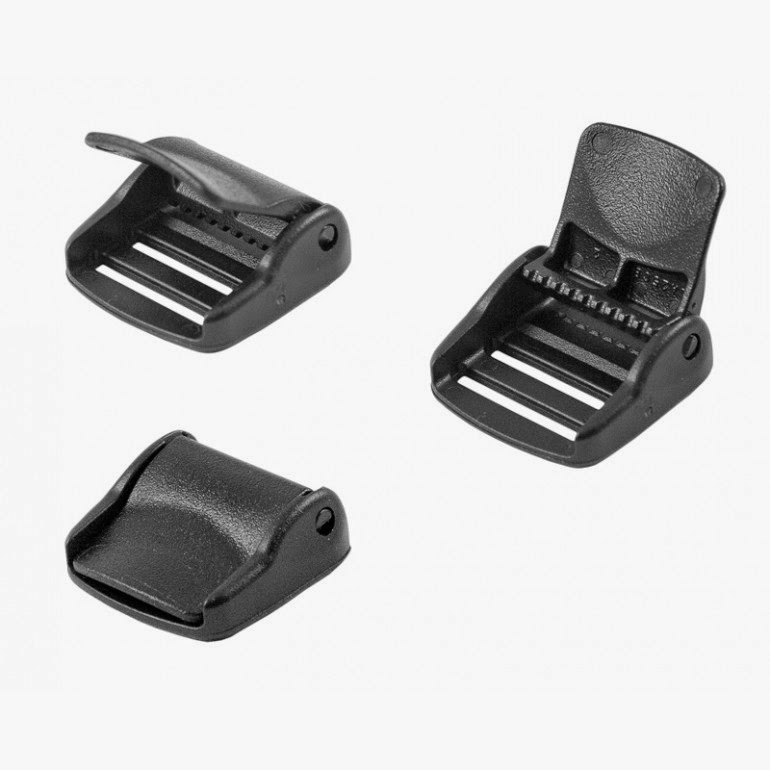
Now on to the 2 point slings: Quickly, we figured out that the adjustments on the Viking and the Blackhawk! were not as easy to maneuver as we had hoped. The Viking’s adjustment mechanism was reminiscent of the ALICE pack. It was not just a simple slide to loosen or slide to tighten type scenario. Neither my wife or I could fully get the process down that well. We both did, however, love how wide the strap was that went across the shoulder. It was by far the most comfortable system for her. If she never had to adjust the length, she would have picked this strap hands down. The Blackhawk! strap adjustment uses a plastic cam lever clip thing. It takes some true manual dexterity to operate this device with one hand and not drop your rifle. It looks similar to this (my picture didn’t come out very well so I had to shop Google for something you could actually see).

Adjustment clip

Adjustment clip

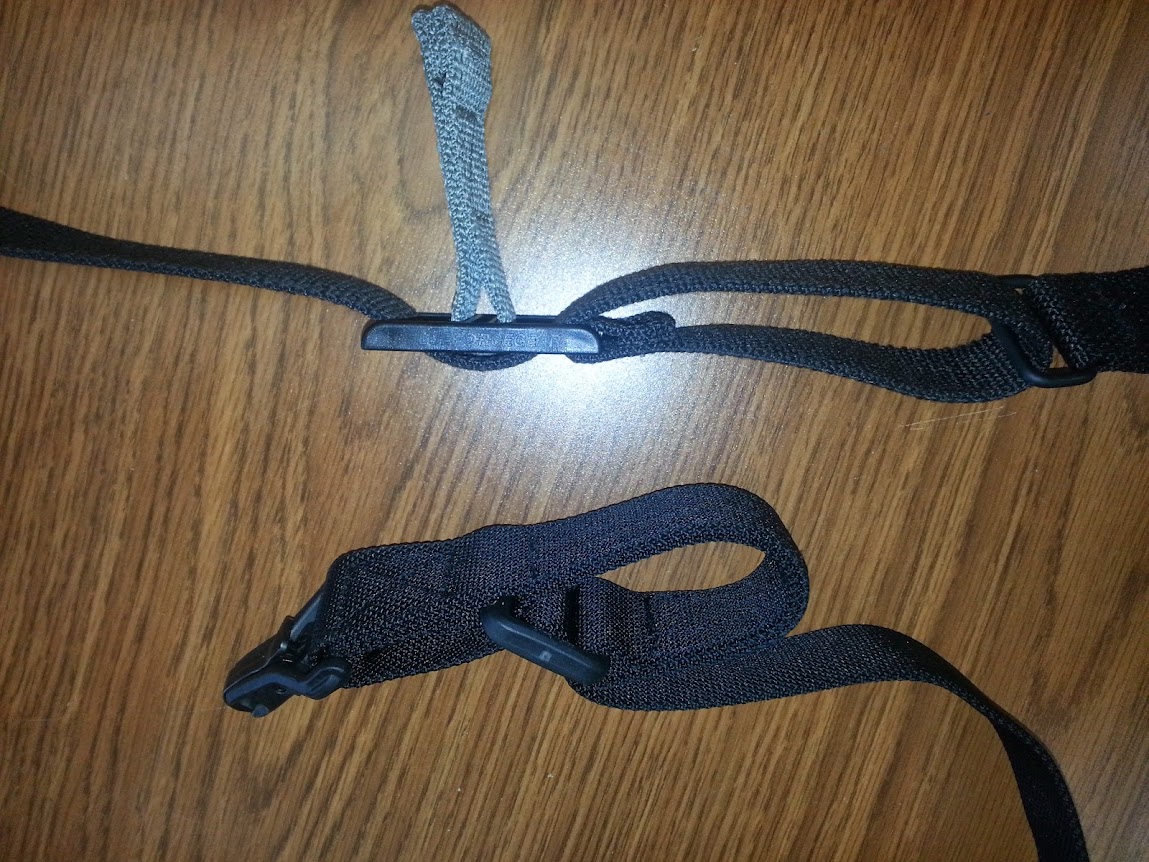
This left the Magpul and the Blue Force slings. I love the slide adjustment on both. There is a little webbing handle that you grab hold of and just slide into position. The sling actually stays put when adjusted as well. The Magpul used a loop for a handle while the Blue Force had a piece of webbing that was sewn back upon itself to make an actual handle. The top sling in the picture below is the slide and handle for the Blue Force. The bottom one is the Magpul. As you can see, they are both very similar in function and design. Well, they are close enough that I don’t really see that much need to debate or investigate their design. They both work quite well.

Slide mechanisms

Slide mechanisms

The two things to note about these slings is as follows:

  • The Magpul has built in clips. It doesn’t work efficiently when clipped to normal rifle sling swivels. The clip binds a bit if you are not careful.
  • The Blue Force does not have easy disconnects. You will have to attach the webbing to the rifle using old school slider clips. This isn’t a huge issue for me, but might be a deal breaker for others.

Here is a good picture of the Magpul attachment clip. These are on both ends so having a good ring to attach to seriously cuts down on the binding issue.

Magpul attachment clip

Magpul attachment clip

As it all turns out, I like the Blue Force and will purchase one of those next paycheck. The wife really liked the Magpul, but wants me to figure out a way to pad the straps for her. This might be another post in the making as I figure out how to modify the strap with pads. Hopefully she doesn’t want it Hello Kitty or something creepy like that……

My final words regarding the different slings we tested are quite simple. The slider type adjustment systems are far easier to operate than the other systems we played with. Lastly, webbing is webbing. It is all very uncomfortable after a while. As long as it met my original criteria and didn’t damage my rifle, I was happy. When you go shopping for yourself, make sure you set a couple of criteria that meet your needs and weigh all the options available against those metrics. These

  • Share on Tumblr

Ingenious Home Defense Rounds

by Woodsbum

Our family has been into firearms and reloading ammunition as long as I can remember. Somewhere in all those years I learned about some special pistol loads that our family loads up for self defense. It really didn’t dawn on me until discussing them with Gunguy that they were anything special or out of the ordinary. I essentially grew up with this specially loaded ammunition and has he says, “You take a lot of things for granted because of how you grew up.” Well, this post is for you Gunguy and I hope that it helps push you toward that crazy world of reloading.

Here are the interesting features of this round:

  • Great bullet expansion
  • Very little penetration – lowers the risk of bullets passing through the target
  • Low velocity so multiple shots are not as difficult
  • Inexpensive to load up and use compared to other “defense rounds”

Due to the huge influx of compact revolvers in .38, most of my family has adopted that round as their carry pistol. That is why I will discuss the speed and reloading specifications for this particular caliber. It is also important to note that these work best out of a revolver due to feeding issues in automatics.

With no further build up, here is my family’s adopted defense round:

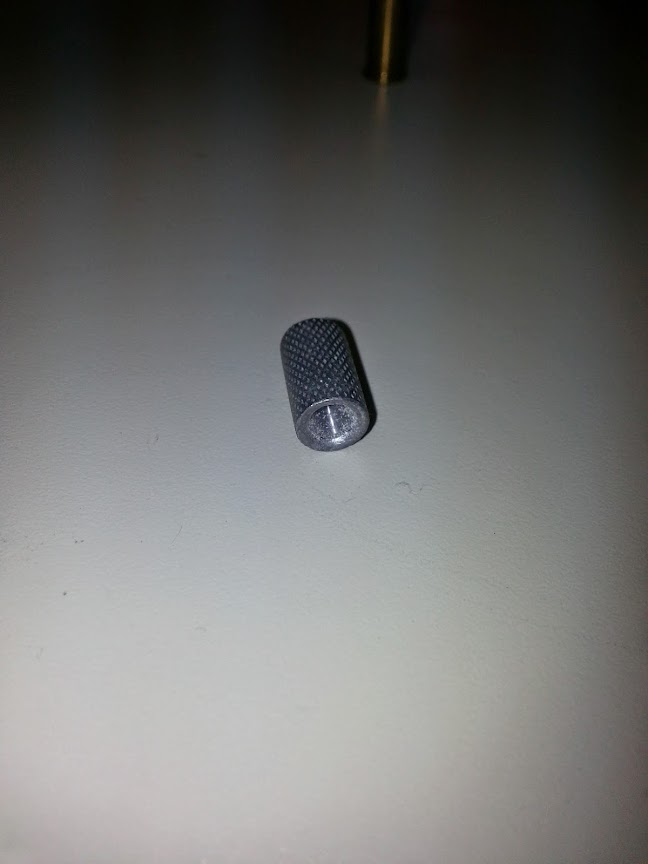
.38 using inverted wadcutter

.38 using inverted wadcutter

As you can see, there appears to be a huge hole in the center of the bullet. This is how it would normally appear if loaded per factory intended:

Normal wadcutter load

Normal wadcutter load

To get this sort of hollow point looking effect, we load each .38 with 2.5 gr of Bullseye powder and just press the bullet in backwards. With this configuration we are achieving around 650 fps on the chronograph. The following picture shows a pumpkin shot with one of these rounds. I do not have any real desire to figure out any other numbers in regard to the ballistics so you are stuck with the “pumpkin desecration test.”

This is the entrance “wound.” Please note how the entire face of the pumpkin is cracked in various directions radiating outwards from the point of impact.

Initial damage to the pumpkin.

Initial damage to the pumpkin

This is where the bullet exited the pumpkin. Again, please note how the pumpkin is cracked.

Damage as bullet exited the pumpkin

Damage as bullet exited the pumpkin

For those of you wondering, all the other little holes are damage from a pellet gun and a couple .22 short. We decided to shoot it with the .38 after my son had already been plinking for a bit.

Considering this a low velocity round fired from a .38, this really packs a fairly large punch. Like I mentioned, however, the real benefits are associated with the minimum recoil and lack of penetration compared to other loads in that caliber.

For those of you who might not reload and don’t know what at “wadcutter” bullet is, here are a few more pictures. These first two show what the actual bullet looks like. The first one is how it would normally be pressed into the casing. The second one is the inverse side.

Wadcutter for .38

Wadcutter for .38

Back side of the wadcutter bullet.

Back side of the wadcutter bullet.

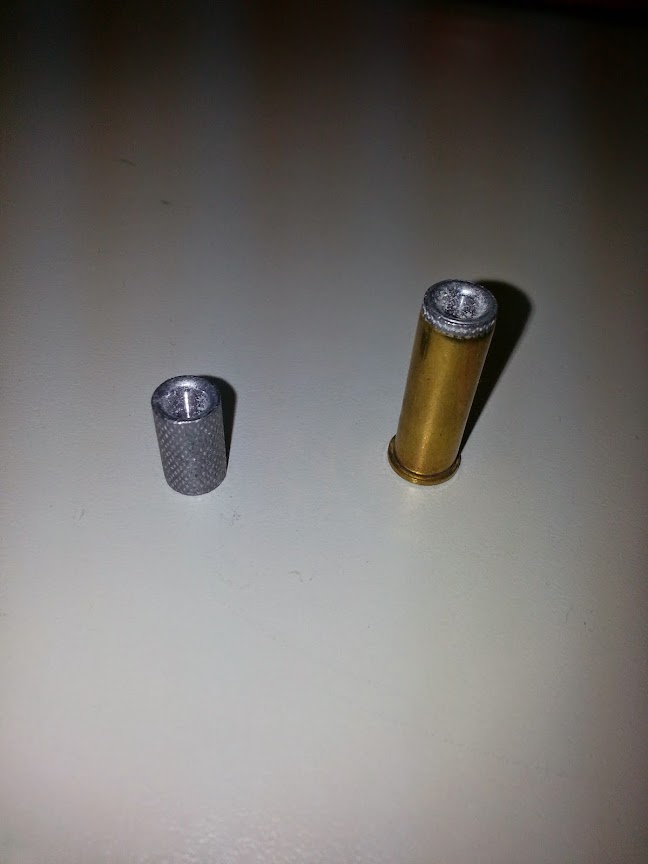
As you can see, it is not a jacketed bullet like most people are used to. It is a simple, cast bullet made of lead. The last picture I have is the bullet next to the loaded cartridge.

Wadcutter bullet and how it looks inversely loaded.

Wadcutter bullet and how it looks inversely loaded.

Now, I don’t expect the world to adopt this defense load or suddenly make this load one that is mass manufactured. What I hope that anyone reading this will do is start to think outside of the established norms. This goes for everything posted here at Age of Decadence. This is our main goal. Please look around, evaluate the older ways that worked effectively, and don’t be afraid to blaze your own trail. Let us know if you have any other tricks like this.

  • Share on Tumblr

Follow Up to First Aid Kit Post

by Woodsbum

There was quite a bit of chatter about my post last week. Almost all of it was related to my comments regarding the use of tourniquets. Because of this, I wanted to reiterate several of the things I said last week for those that had failed to read my whole post.

  1. “My opinion is that there is WAY to much emphasis based around the idea that people will be able to get to a hospital in a timely manner.” The places that I like to hunt, fish and camp are well outside of cell phone coverage and unaccessible except by foot or air. Most people I know that do serious backwoods activities are the types that understand that help might be 2-3 days (or longer) away if they get into trouble. Many don’t. Even more people, such as many that tried to attack my stance on tourniquets, live in a SHTF fantasy world where Emergency Rooms are still open and ambulances continue to operate. As stated last week, “there is WAY too much emphasis based round the idea that people will be able to get to the hospital in a timely manner.”
  2. “I have seen a lot of problems with most “field” first aid kits being produced and sold today in addition to the severe lack of proper training given to people in their use.” Most “field” first aid kits tend to be either constructed like a military kit or like an OSHA recommended kit you would see in a business. There tends to be little middle ground. Either you carry everything with you to include a kitchen sink or you have material for sucking chest wounds. My kit is personalized to the injuries I have encountered and well within my skill level to use.
  3. “Even the idea of using a Israeli emergency bandage is a far superior idea than drawing that dotted line with a tourniquet that says, ‘Cut off appendage here.'” Remember how I said, “there is WAY to much emphasis based around the idea that people will be able to get to a hospital in a timely manner?” This goes right along with that. If a tourniquet is applied for too long of a period of time by someone that doesn’t know how to properly release said tourniquet (read as hospital personnel), the limb can be lost. Not many people without extensive medical training know how to release a tourniquet properly. Now think about how many “gear junkie, combat commandos” there are. Should we really be teaching these barely trained people to use a tourniquet as a first line in control of hemorrhage? My opinion is that they are not educated enough in most instances to make that determination. All you have to do is watch a large city’s morning commute to agree with me.

Due to the wars in Iraq and Afghanistan there has been a marked increase in the use of the tourniquet as a first line of defense against exsanguinating limb injuries. The average time spent with the tourniquet in place was approximately 70 minutes. (Lance E. Stuke, MD MPH) This echoes my statement that a prompt evacuation to a higher tier medical facility was a significant factor in limb survivability. This has also led to other people agreeing with the use of tourniquets in a prehospital setting (Lee and Porter, 2007). Again, they are specifically referring to short term use of the tourniquet and not considering that it might be on the patient for the amount of time needed to muster a rescue operation. Even the National Highway Traffic Safety Administration has done studies regarding the use of the tourniquet (NHTSA, 2014). What is interesting to note about their findings is that most of their research that has a complete outcome of the patient listed is from military cases. They also note that there are “no studies identified for this report <to> provide a direct comparison of tourniquets and compression for treating trauma patients with extremity hemorrhage.” What this means is that the military’s new trend of using the tourniquet for a primary control of hemorrhage really is biasing the studies provided by the military. This should then assume military assets, trained personnel on site, and types of injuries that would rate the use of a tourniquet.

As a quoted article that was used to counter my opinion based on research and experience, the following was submitted to me (Risk, MD MPH FACEP and Augustine, MD FACEP). It does, however, echo my point dramatically. It quotes from the 2004 edition of Emergency War Surgery Manual, ““Use a tourniquet early, rather than allow ongoing blood loss. Substitutes for issued tourniquet include belt, torn cloth, gauze and rope, among others … does not require constant attention; allows first responders to care for others, extends resources.” Their take on limb loss is as follows, “Application for more than two hours may increase limb loss. Don’t avoid a tourniquet in order to save a limb, and then lose a life! Use of the tourniquet does not always lead to limb loss.” Considering the fact that I said “there is WAY too much emphasis based round the idea that people will be able to get to the hospital in a timely manner,” using a tourniquet as a first line of defense against hemorrhage should be highly scrutinized based upon transportation and availability to a hospital’s resources. Again, the link provided (Risk, MD MPH FACEP and Augustine, MD FACEP) supports my statements in the following way, “Although the studies continue to verify a lack of extremity injury attributable to the use of tourniquets, the ongoing improvement and reduction in transport times to tertiary levels of care further reduces those concerns.” My final point referencing this article is simply their way of stating the same thing I said, “Each of these points is meant to delineate the differences that would likely mean less civilian EMS use of tourniquets, more rapid transport and shorter times for their usage—hence, less potential for limb ischemia. Therefore, there should be far less hesitancy about using this tool at the appropriate time and for the appropriate patient to obtain rapid hemorrhage control. The limiting factors appear to be appropriate medical direction and protocols, equipment selection and adequate training,” of which being adequate hospital response time and proper training. YouTube videos really do not equate to proper training.

Of course there are several studies that show when a limb was salvaged and significant functional recovery was accomplished, the time with tourniquet in place was only 16 hours (Kragh, MD, Baer, PhD, and Walters, PhD 2007). Again, this was ONLY 16 HOURS!!!! It takes longer than that to reach my alpine elk hunting location, there is no cell phone reception there, and it takes longer than that to reach a location to connect to the nearest HAM radio repeater. Even this study used a combat casualty and the time frame for advanced medical care was 16 hours. I found another reference to a 24 hour tourniquet application where the patient was in a cold environment. The basis for the study and research conducted was a bit on the reporting versus scientific side, so I will not go into any depth or link that “article.”

For those of you who have read all my post and have done proper research into this topic, I hope you found it enlightening and now understand the restrictions that the tourniquet has regarding usage. It must be appropriate and the personnel must be trained. It is not a first line of defense against hemorrhage like many “weekend commandos” preach. It is both a life saving device and a crippling device all in a single package, so choose it wisely.

To fully follow up on my post Friday, I will reiterate that your kit should be multipurpose and fit within your particular needs. Here are my final thoughts and advice:

  • If you do not feel comfortable in applying a tourniquet you should then get highly proficient with the other hemorrhage control options available.
  • You should not use a tourniquet as your primary choice for hemorrhage control.
  • If you are training for any of the possible SHTF scenarios, please remember that advanced medical care is not going to be readily available. Any possible way to remain completely independent and self sustaining is highly recommended.
  • If you are in a combat situation, I would suggest that you follow your current protocols and standing orders per Chain of Command.
  • Share on Tumblr

First Aid Kit

by Woodsbum

It seems that a very hot topic among people I speak with is field medicine. To be specific: first aid kits and tourniquets. After finally getting tired of having to repeat my same spiel on the dangers of tourniquets improperly used and how first aid kits tend to have WAY too much stuff in them, I felt almost forced to put fingers to keyboard and make a post.

Fist off, I want to let everyone know that I am not an “armchair commando” when it comes to field medicine. I was a paramedic/EMT for 4 years and then joined the Navy, where I was a Hospital Corpsman for 9.5 years. Overall, I have almost 14 years of direct patient care in both field and hospital settings with 9 years being in a pre-hospital setting. I was ACLS, BTLS, ATLS, PALS, NALS, EMT Instructor, BLS Affiliate Faculty, Combat Lifesaver Instructor, the list goes on. In another words: I am not a trauma surgeon or a contributor to AMA journals on pre-hospital trauma treatments, but I have quite a bit of hands on experience and training.

This being said, I have seen a lot of problems with most “field” first aid kits being produced and sold today in addition to the severe lack of proper training given to people in their use. My opinion is that there is WAY to much emphasis based around the idea that people will be able to get to a hospital in a timely manner. A prime example of this is the overuse of the tourniquet. The tourniquet is an easy way to say, “Everything below this point will be chopped off and you better know a good prosthetics person.” The fact that all the “weekend commandos” now carry one and there are classes designed to promote tourniquet use absolutely drive me nuts. Having worked on ambulance in rural settings and done such things as pull people’s extremities out of heavy equipment, I have NEVER had to resort to a tourniquet. Between the proper use of the following techniques, I have been able to avoid contributing to a patient’s reason for amputation:

  • Direct Pressure
  • Pressure Dressing
  • Elevation
  • Splinting as needed
  • Constriction Bands NOT tourniquets
  • Ice if available

Even the idea of using a Israeli emergency bandage is a far superior idea than drawing that dotted line with a tourniquet that says, “Cut off appendage here.”

As I step off my anti-tourniquet soap box, I will admit that they do have their place IF they are used properly and appropriately. They just need to be used as a last resort and not a replacement for the other less invasive/damaging options.

Enough about how dependence upon hospital settings have increased the use of the tourniquet as a way to control bleeding. Let’s take a quick look at some of the things that I carry. Now I want you to know that, because I had to use them and have been too lazy to replace the items since my last outing, there are two items that I carry that are not in this picture. Sorry for that, but I just grabbed my pack and came in to take pictures. When you look at this you can definitely see that these items are not my shiny little kit that I hope never gets used. These items are exactly what I carry and can cover you in almost any situation with the proper training.

My first aid kit excluding 2 4x4's and moleskin

My first aid kit excluding 2 4×4’s and moleskin

Let me go through each item so you have a good idea of what each is.

  1. Waterproof case: In my kit, I chose the old issue first aid kit case that really isn’t waterproof but it was handy and works. It also has an ALICE cover that attaches to the left side of my butt pack or I can remove the case and just throw it into whatever pack I have at that time.
  2. ABD: Military issue Abdominal Battle Dressing. This is the clear wrapped bandage in the brown paper wrapper. This thing will take care of eviscerated abdomen, severe chest injuries, or even be used as a soft splint if need be. It unwraps to be fairly large and has long tails to tie it around whatever you have applied the bandage to. The dressing portion of the bandage is very absorbent and quite thick.
  3. Battle Dressing: This is the OD green thing on the left side. It is a smaller version of the ABD. Not only can it be used as a dressing, but it also can be used to tie off a splint if you have to. Of course that is worst case scenario since the patient’s clothing is always a better choice.
  4. Three Triangular Bandages (cravats): These are not only great for scarves and headgear, but they work very well as slings, splint ties, bandages to hold on dressings, constriction bands, tourniquets if all else fails, hold ice/snow, filter big stuff out of water, or even as gaiters to keep some of the crap out of your socks if need be. These are very multipurpose and you can see that I use them a lot.
  5. Sutures: Yes, I have had to sew myself up in the field. Yes, it hurts. I am not John Rambo. Yes, I still have the scar. No, you can’t see it…..
  6. H Shaped Bandages: These are great for knuckles and such. Basically any point that bends, but is not too big. I keep them in my kit as a way to make myself feel better if I bust up a knuckle. I carry both types that have the adhesive strips that will stick well to a flat-ish area or an articulating area.
  7. Larger Bandages (read large Bandaids): These work well for skinned elbows, knees, extremity cuts, small head lacerations, etc. They stick a lot better than a 2×2 or 4×4 with silk tape.
  8. Kwik-Scan Thermometers: You put these things on someone’s forehead to check their temperature. No, it is not as accurate as a real thermometer but I can carry several in my kit quite easily. They are great for checking for fever (possible infection of a cut for instance) to a low body temperature (cold injury). Great things to carry with you if you are not anywhere near a hospital and won’t be for a period of time.
  9. Butterfly: I carry a couple butterfly closures. These are great for when you don’t have a total need for suturing something closed.
  10. Cling: Rolled gauze is amazing for so many reasons. It holds bandages on SO well, can be twisted to make splint straps, etc. Great piece of gear to take.
  11. 3M Silk Medical Tape: I like the 3M stuff because it sticks SO much better than the Curad brand. It can also be twisted to make cordage.
  12. Alcohol and betadine based swabs: These are antiseptic swabs to clean wounds. The alcohol ones will also catch on fire if need be if you can’t get something else burning.
  13. Abdominal Patch/Dressing: I keep these not only for what I call “bigger spills” of blood, but they can easily be cut and used to cover eyes as well. In a worst case scenario, I have also offered them up to my female campers who needed a sanitary pad. They are better than nothing.
  14. Trash Bag: That is the rolled up blue thing in the middle. They can be wrapped around entire torsos in the case of any open thoracic or abdominal injury, can be used to keep bowels moist in the even of an evisceration, and can even be used to gather condensation if placed over a plant to gather water. Cut out some holes and you can even keep your patient partially dry in the rain.
  15. (Not Pictured) Moleskin: This is for blisters or to cover wounds so that you are not slowed down by a bulky bandage. When moleskin gets wet, granted that it was applied correctly in the first place, it tends to almost make a second layer of skin. This stuff is great to keep you going until you can get back and get something treated properly. I have sutured up lacerations, cleaned everything REALLY well, and then put moleskin over the thin dressing to keep Marines out in the field for additional weeks before they get seen to remove the sutures. Mines is not here because I gave my chunk away to someone who had blisters and I forgot to replace it since I have not been out in the woods for almost 4 weeks.
  16. (Not Pictured) 4×4 Gauze Dressings: These are sterile and allow you put them directly on a wound, then use about anything around to cover that wound as a bandage. These I forgot to replace because I was showing off and starting fires with them…..  Don’t ask.
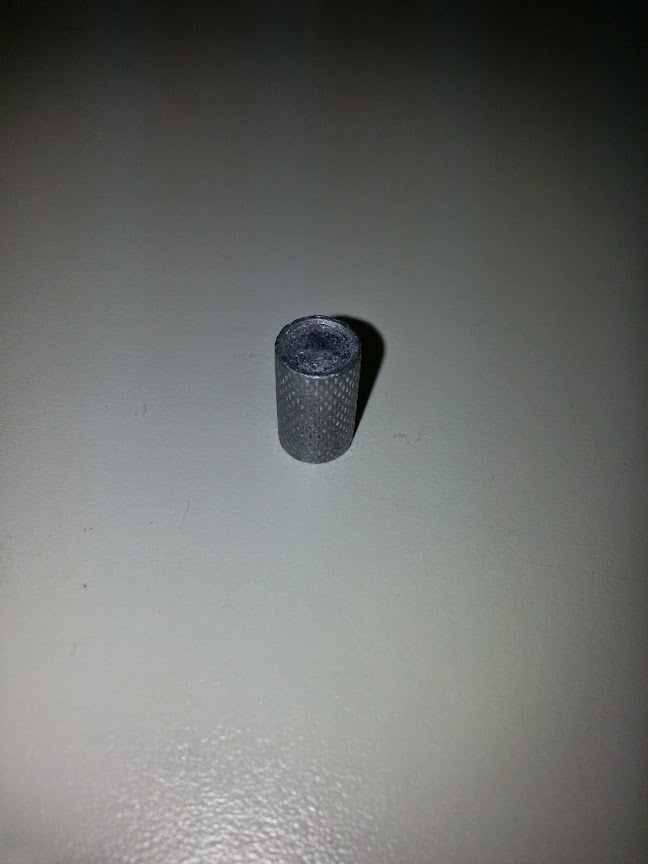
  17. (Pictured Below) Metal straw: I picked up several of these from 7-11. They are branded as Slurpee Straws. I use them to blow up fires mostly, but in the case of a severely compromised airway I can use one for an emergency tracheotomy, in the case of severe chest injury they can be modified for use as a chest tube, or (most importantly) to drink my Apple Pie drink using only the best moonshine/everclear that can be had at the time.

Slurpee Straw of AWESOMENESS!!!

Slurpee Straw of AWESOMENESS!!!

Quick point for those that are not familiar with medical terminology: Dressings cover wounds. Bandages cover dressings. Many “bandages” have a “dressing” built into them to cover the wound, but not all. Having some sterile dressings in your kit to sit directly on a wound is important to keep that wound from getting infected. Toss some into your kit.

As you can see, I don’t carry medications. There are no splints or splinting material. You won’t see any straps to make a litter. All these items can be improvised if needed. Headaches can usually be fixed with some strong coffee as can many respiratory ailments. Of course any serious medical conditions need immediate medical treatment, but you should have your medications with you in those instances. Why should I keep track of and hump Albuterol inhalers for people if you have a COPD? I don’t. I can, however, use my Swiss Army knife and sutures to remove/repair injuries to myself caused by severe “dumb-arsery.”

Lastly, I will say that in my truck I do carry airways (nasal, oral, and masks), Ringers Lactate, sphygmomanometer, stethoscope, surgical kit, BVM, splints, and all sorts of other goodies. There is NO reason, however, for someone to carry all the other crap with them. The average person really needs to realize that purchasing gear does not make them a combat medic. The dependence upon gear and ignoring the idea that education will provide more options in a crisis really needs to stop. Quick applications of products that the user doesn’t fully understand will only cause more injury. Even though it might look “sweet” on your battle belt, there is no reason for anyone to ever use a tourniquet as a first step in control of hemorrhage. There are better solutions that don’t include removal of a hand for a minor laceration.

Just remember: All bleeding eventually stops!
  • Share on Tumblr