Category Archives: Firearms

These are our BOOM STICKS!!!!

Ammunition Basics

by Woodsbum

Because I have spent an obscene amount of money on firearms and firearm related activities, I felt that it would be a great opportunity to help those that are not familiar with ammunition parts or how it works. The following video is one that I use during my hunters eduction classes to give the students a basic understanding of how ammunition works, the different types and the names of the individual parts.

Please watch the following and enjoy!!!

  • Share on Tumblr

Dillon Precision RL 550B

by Woodsbum

In recent months, I picked up a second job as a bouncer so that I could get some extra toys. One of the top items on my list was a Dillon Precision progressive reloader. Both my brother and my father have one that they use constantly. This last winter, I even took some time of work so I could get in on the action. I spent a couple days using my brother’s system and ended up walking out with about 200 .44 mag, 800 9 mm, 600 .45 ACP, 400 .223, 100 30-06, and about 40 .300 Wby. This was all over 2 days and lots of beer drinking. This made me realize something. This system is really worth the money and any serious shooter should look into them.

This is what the whole system looks like all put together.

Dillon Precision RL 550B

Dillon Precision RL 550B

The one pictured above has all their bells and whistles on it, but let me go over a few things that are REALLY needed to help you with regard to speed and ease of reloading. I took the liberty of circling the accessories that you need to get and will list, explain, and prioritize the importance of these accessories afterward.
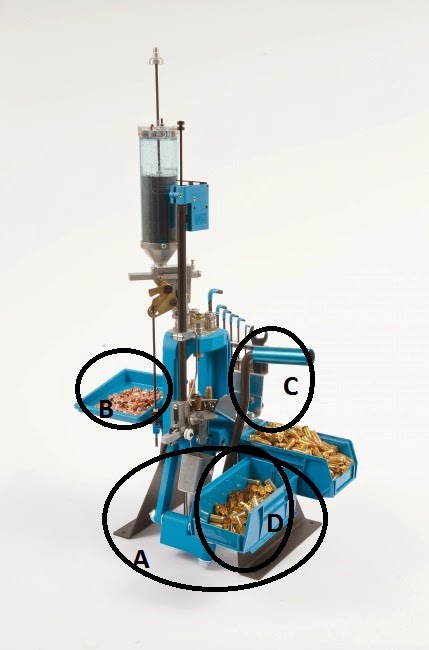
Needed Items Dillon RL 550B

Needed Items Dillon RL 550B

Here is the list:

Strong Mount: The Strong Mount raises your Dillon reloader high enough to allow all the parts to fit above the level of table it is bolted to. It also increases the size of the base of your reloader so that it doesn’t put massive amounts of stress on the base bolts and strip them out of the table. It also, and almost most importantly, allows for the press to articulate freely during the whole cycle. In another words, you don’t hit anything on the table or your chair while you pull the level. This simple mount really should be standard with the reloader for it is difficult to operate without it, comparatively.

Bullet Tray: The Bullet Tray holds your bullets for easier access during the reloading cycle. They sit in the tray right next to the station that presses the bullet and crimps the case. It is also angled just enough so that the bullets roll down and forward so you don’t end up chasing them around the tray. For those of you who have used single stage reloading systems it is best described as the solution to the eventual paper cut from the box due to digging around looking for another bullet to press.

Roller Handle: The Roller Handle allows for more uniform and comfortable pulls of the lever during the reloading cycle. Most single stage reloading people only pull the lever a max of 100 times an hour. Because of the speed through the use of the Dillon, you can pull the lever as many as 500 times per hour if you are really cooking through the cases. This means that comfort can become a fairly important item. The knob on the end of the lever that comes with the system by default just gets to be uncomfortable and clunky after about 250-300 rounds in about 40 minutes of work. That was all I could take on my dad’s system when I used it before I loaded all my components up and went to my brother’s. I actually started getting hot spots on my palm from the knob in that little time of using it. There are probably people that can suck it up or just don’t get bothered by the small little orb digging into your palm……  For me the Roller Handle is a must.

Empty Cartridge Bin/Bracket Assembly: The Empty Cartridge Bin/Bracket Assembly provides quick and easy access to your empty cases. It sits next to and a bit down from the handle so as to not interfere with its operation, but is conveniently located next to the first stage of the reloader. My dad only has the Strong Mount and no other accessories for his Dillon. He has to grab cases from one of those holders that are very common for single stage systems. After having used both setups, this accessory will speed up your reloading by at least 10-15%. It has to do with the cases being a few inches closer to where you put them into the case holder. Less movements and less head movement to look for the next case really does increase your speed over time.

Some accessories that are offered that you really don’t need, but are quite nice.

  • Low Powder Sensor – it sounds an alarm when your powder gets low in the measure.
  • Additional Primer Tubes – You can load up several of these tubes so you don’t have to quit reloading to refill in the middle of a run.
  • Quick Change Assembly – These Quick Change kits provide you with all the parts needed to just set your dies and powder measure for each caliber that you reload, then swap the whole system out when you go to a different caliber. No more resetting your dies, adjusting your powder, etc. It is only a couple pins and it is ready for the next run.
  • Casefeeder – I have not seen one of these working yet, but I REALLY would love to get one up and working on my system. It would really speed things up that much more.

At this point I am having a hard time deciding if I am going to buy all these additional accessories before I get my shotgun shell reloader. Depending on how I decide to proceed, I might get the casefeeder in the near future. If I do, I will update everyone as to how well it works.

Being someone who loves to buy things, but has a weird mental block when it comes to time saving purchases I have realized that progressive reloaders like the Dillon RL 550B is far more. It doesn’t just allow you to reload quicker, but allows you to actually save money enough to justify using what you just reloaded. There is no need to put off multitudes of other projects just to get enough rounds ready for hunting. I can crank out hundreds of rounds per hour.

The last part of the whole equation is about saving money. Many times I would reload a few rounds, but supplement my weekend outings with a few hundred factory loads. This actually ended up being more costly in the long run. Components are so much cheaper than loaded rounds if you buy things in bulk. Purchasing only enough materials to do a few hundred rounds really never cut overall costs that much. Now that I can really crank out the rounds, it will get much cheaper in actual monetary costs. Couple that with time savings and I think we really have a winner here. Let’s face it, getting the opportunity to spend one hour drinking beer, smoking my pipe, and reloading enough rounds to take the wife out shooting makes this an affordable past time again.


  • Share on Tumblr

Five Gun Safety Rules

by Gunguy

While a gun safety class is never wrong, really all you need to know are the five rules of gun safety.

The 1st rule – The Gun Is Always Loaded

Even when a gun isn’t loaded, every gun enthusiast worth his salt treats the gun as if it were loaded. You watch someone unload the gun, you take the gun from him, you check it yourself, you still follow the next three rules.

Obviously it’s not factually true that all guns are loaded, but when you’re around guns, you treat all guns as loaded even if you “know” they aren’t. If that’s your default position about guns, you won’t have an accident in which someone says, “I didn’t know it was loaded!”

The 2nd rule – Never Point The Gun At Something You Are Not Prepared To Destroy

A gun is not a toy. It should not be used to joke around. If you point a gun at something, it better be something you intend to destroy. FWIW, there’s no such thing as a “shoot to wound” defense. If you shoot someone threatening, your only defense is that you were in such danger that killing the person was the only recourse. If you have the ability to shoot to wound or fire a warning shot, you have the ability to make another choice besides shooting someone.

The 3rd rule – Always Be Sure Of Your Target And What Is Behind It!

Bullets don’t stop because they hit something. They penetrate the object and much of what is behind the object. Never fire at something without a bulletproof backstop. You shot your TV in your living room and killed your roommate in his bedroom? You weren’t following the third rule. If you’re target shooting on public lands, you better be in an open field where you can see everything behind your target for a long distance or everything up to your bulletproof backstop.

The 4th rule – Keep Your Finger Off The Trigger Until Your Sights Are On The Target!

Your finger stays OFF the trigger until your target is in your sights and you are ready to destroy. Even if the safety is on and the gun is unloaded. Because rule 1 – the gun is always loaded (and the safety is always off).

If you follow these, you will not have an accidental discharge.

The 5th rule –If your with people who aren’t following these rules, you needs to leave the situation.

  • Share on Tumblr

APEX M&P Duty / Carry Action Enhancement Kit Review

by Gunguy

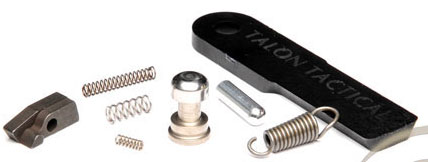
I purchased the APEX Duty / Carry AEK kit about a month ago. The installation was a pain in the ass because I did all the work on my kitchen table but the effort was well worth it. Keep in mind that you will not be able to install the Apex Ultimate Striker Block part of the kit if you do not have a bolted down vise or a SW MP Sight Mover. After you install the entire kit you will need a sight mover at the range so you can rezero your sights.

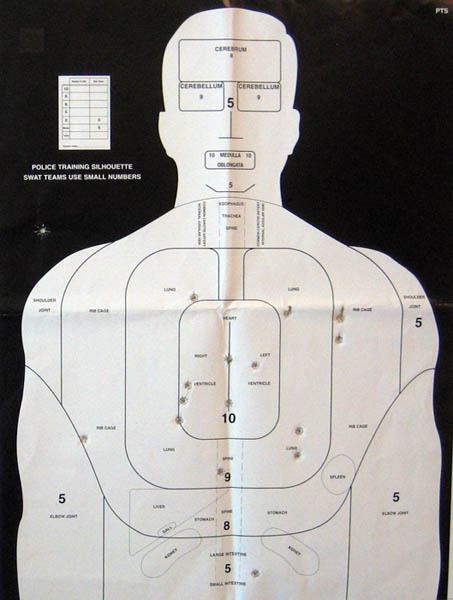
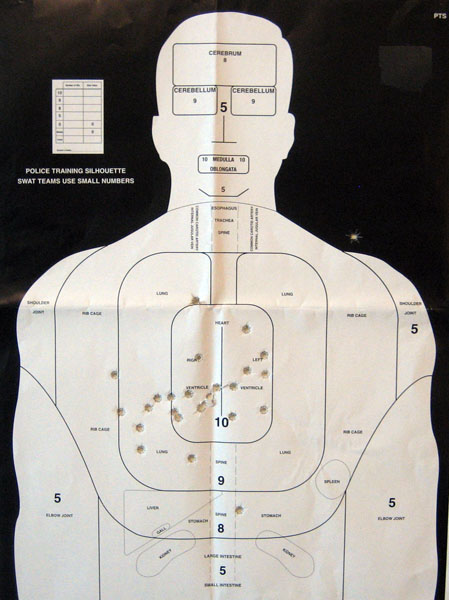
Before I installed the Apex kit the trigger on my MP9 was mushy and had a false reset.  After the kit installation the trigger was smooth and the trigger reset was pronounced. The trigger reset was a 100% better but it’s not as defined as in my Sig 229. The greatest thing about installing the Apex kit was that my groups at 50 feet were considerably tighter. You can see the before and after results below.

APEX Duty / Carry AEK

APEX_Duty_Carry_AEK
Before Apex AEK at Fifty Feet

before_apex_aek

After Apex AEK at Fifty Feet

after_apex_aek

  • Share on Tumblr

Tested Some Tactical Slings

by Woodsbum

I took the wife and son out shooting this last weekend which gave me the opportunity to test out several tactical slings for our AR’s. I borrowed some from Gunguy, wasted my money on a couple, and also borrowed a few from another friend of mine. Here is the list of what all slings we tried out:

Let me preface this whole post by giving you guys an idea of what I wanted in a “tactical” sling for our AR’s before I really get too far into things. We wanted slings where we could carry our rifles in a manner that would allow us to use both hands if needed without slipping off our body. This immediately discounted traditional hunting slings. These type slings tend to slip off the shoulder when using both hands to perform various tasks. You can carry it across your back, but this makes it difficult to still under or around objects (read trees and brush) without getting caught up. This left us only a few options, most of them “tactical” type solutions. Our main requirements were as follows:

  1. Allow easy transition from using both hands to having rifle ready for usages
  2. Make movement in and around brush/trees easy without getting caught up
  3. Be adjustable

To add to the confusion and difficulty in finding a solution, my wife also wanted to make sure that the sling was comfortable to use and easy to adjust…….   Now you see my dilemma.

Our testing facility was quite vast and really tranquil. We took a trip up to the mountains above the city we live in and picked a nice, open valley to test and shoot. Between our two rifles we blew off around 750 rounds of .223. I also carried 2 9 mm pistols to see if the slings interfered with shooting or carrying my pistols. Between .223, 9 mm, 30-06, 12 gauge and .22lr we expended around 2000 rounds in total. Not a whole bunch, but enough to give us an idea of how restrictive these slings really were overall.

The first thing that we found was that 1 point slings were not for us. Not only did they allow the rifle to bounce around hitting us with the barrel while we did other things, but when we slid the rifle to our side to be out of the way my wife would jam the muzzle in the dirt while bending. These definitely did not fit the “easy movement” aspect of our trial. My bruised shin also agrees with these findings……

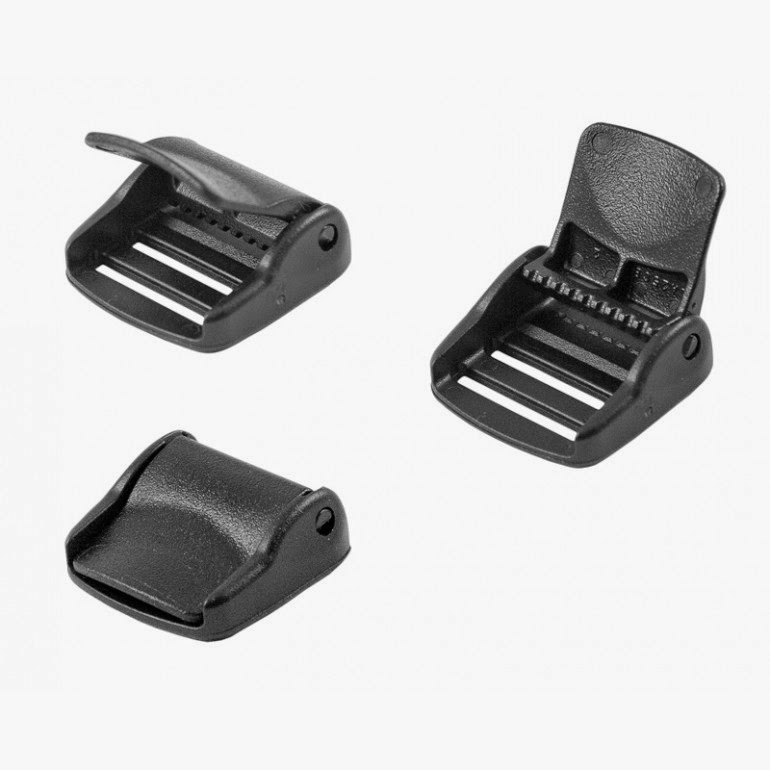
Now on to the 2 point slings: Quickly, we figured out that the adjustments on the Viking and the Blackhawk! were not as easy to maneuver as we had hoped. The Viking’s adjustment mechanism was reminiscent of the ALICE pack. It was not just a simple slide to loosen or slide to tighten type scenario. Neither my wife or I could fully get the process down that well. We both did, however, love how wide the strap was that went across the shoulder. It was by far the most comfortable system for her. If she never had to adjust the length, she would have picked this strap hands down. The Blackhawk! strap adjustment uses a plastic cam lever clip thing. It takes some true manual dexterity to operate this device with one hand and not drop your rifle. It looks similar to this (my picture didn’t come out very well so I had to shop Google for something you could actually see).

Adjustment clip

Adjustment clip

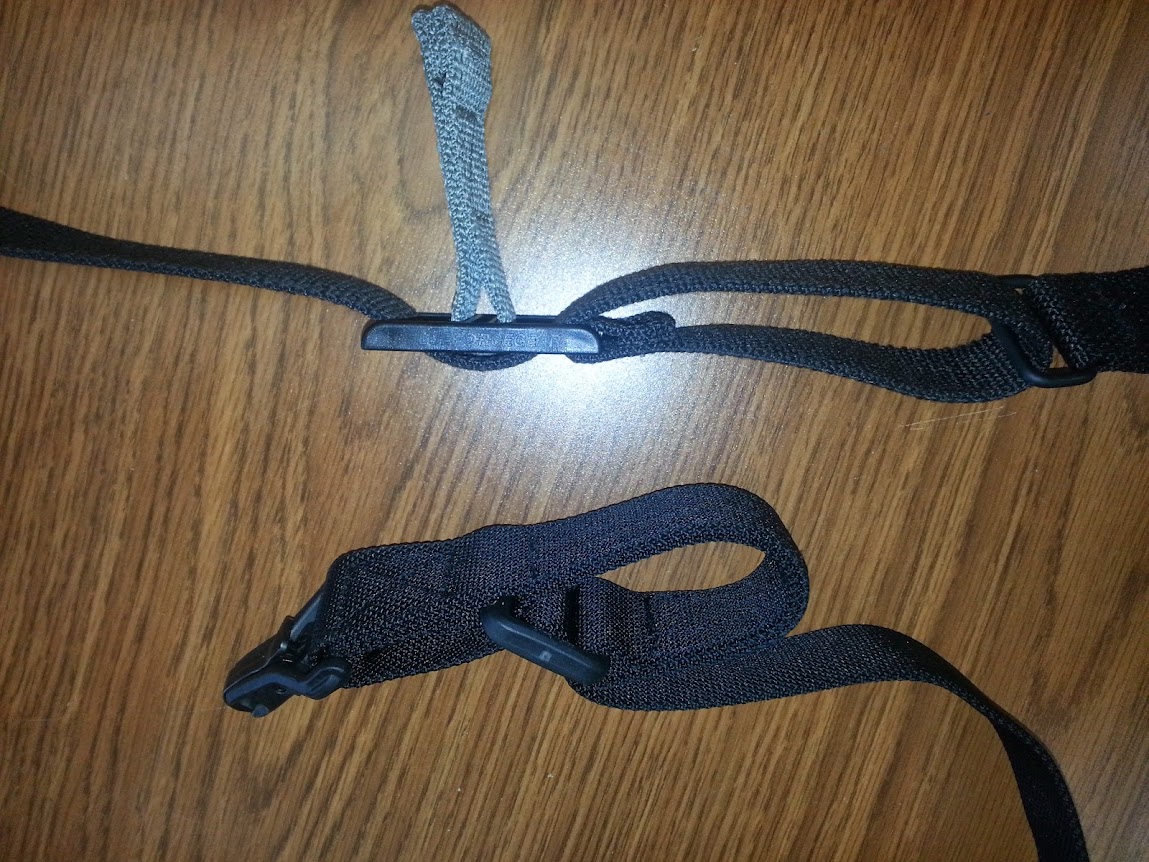
This left the Magpul and the Blue Force slings. I love the slide adjustment on both. There is a little webbing handle that you grab hold of and just slide into position. The sling actually stays put when adjusted as well. The Magpul used a loop for a handle while the Blue Force had a piece of webbing that was sewn back upon itself to make an actual handle. The top sling in the picture below is the slide and handle for the Blue Force. The bottom one is the Magpul. As you can see, they are both very similar in function and design. Well, they are close enough that I don’t really see that much need to debate or investigate their design. They both work quite well.

Slide mechanisms

Slide mechanisms

The two things to note about these slings is as follows:

  • The Magpul has built in clips. It doesn’t work efficiently when clipped to normal rifle sling swivels. The clip binds a bit if you are not careful.
  • The Blue Force does not have easy disconnects. You will have to attach the webbing to the rifle using old school slider clips. This isn’t a huge issue for me, but might be a deal breaker for others.

Here is a good picture of the Magpul attachment clip. These are on both ends so having a good ring to attach to seriously cuts down on the binding issue.

Magpul attachment clip

Magpul attachment clip

As it all turns out, I like the Blue Force and will purchase one of those next paycheck. The wife really liked the Magpul, but wants me to figure out a way to pad the straps for her. This might be another post in the making as I figure out how to modify the strap with pads. Hopefully she doesn’t want it Hello Kitty or something creepy like that……

My final words regarding the different slings we tested are quite simple. The slider type adjustment systems are far easier to operate than the other systems we played with. Lastly, webbing is webbing. It is all very uncomfortable after a while. As long as it met my original criteria and didn’t damage my rifle, I was happy. When you go shopping for yourself, make sure you set a couple of criteria that meet your needs and weigh all the options available against those metrics. These

  • Share on Tumblr