I ran across this bimbo that obviously has brain damage due to peroxide poisoning. She claims that she is just completely exhausted because she has been shopping for a “protection gun.” Since she loves being single, she wants a “protection gun” and not a “murder gun.”
Yes, you read that correctly. The Murder Gun Moron believes that there are two types of guns:
Last year I picked up two Marlin lever guns, one in 30-30 and one in 45-70. Both rifles I ended up putting scopes on, but wanted a way to still have access to my open sights for snap shooting. I opted for a similar setup as to what I have on my old Remington 760 30-06 which uses see through scope mounts and a scope.
Having used see through scope mounts on my 30-06 for over 20 years, I have come to love the setup. It allows you the opportunity to just quickly snap shoot as in brushy environments, but allows enables you to use your scope for longer shots. My 30-06 has an old Simmons Prohunter 6-24 x 50 on it for longer shots, but with the see through scope mounts I have used it quite effectively as a brush rifle. The very fast follow up shot capability that a pump or lever action provides really makes the use of see through scope mounts a phenomenal configuration to fully play to these action’s strengths. Jeff Cooper loved the bolt action 30 caliber with a scout scope, but I like my configurations much better.
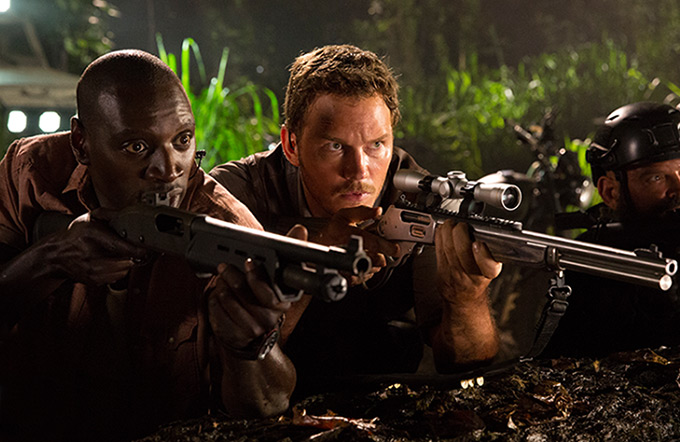
For some reason this type of setup has fallen WAY out of popularity among the general hunting population. Either that or it never caught on fully, thus making the search for good rings a bit more difficult. When Jurassic World came out, I noticed that the character Owen carried a Marlin similar to mine and was sporting the Leupold see through scope mounts. Since I am already a fan and have been half heartedly searching for the right mounts I was now motivated to step up my search.
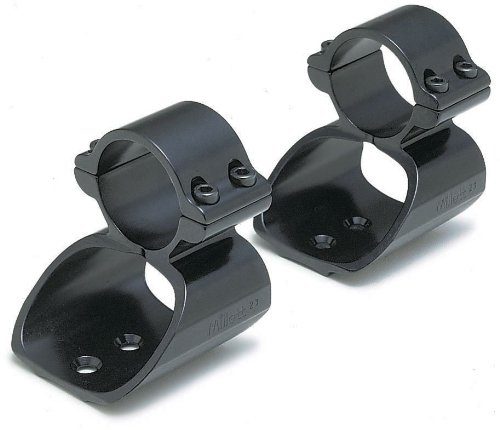
I looked at the Leupold mounts, but only saw versions that required a rail for attachment. The rail was seriously hindering my ability to see my sights and get a decent sight picture. There are more cut down rails available, but I opted to find something that didn’t require the use of a rail.
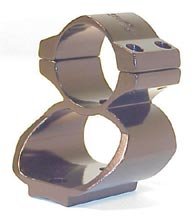
Since I had 2 rifles and no way to really check out the quality of either product, I ordered one of each and figured if either one was horrible I could just order an additional of the good one. Luckily for me, both seem pretty nice, installed easily, allow a great sight picture, and handle the recoil without loosening up. Also, it was nice that the Kwik-Site was a polished blued steel color while the Millett was a bit more matte colored. This means that both my rifles also have rings/mounts that match the rifle and scope.
I was actually a bit worried about the Kwik-Site mounts because I have never heard of them before. Interestingly enough the mounts handled the recoil of my 45-70 without issue, never slipped, and after sighting in I was making little flower patterns at 50 yards because I was going through the same hole with every shot. As a point needing noted: bench rests are amazing for sighting in your rifles. Four shots are needed instead of countless rounds to get fully sighted in.
The iron sites are also afforded a completely unobstructed view of the target with both models. All said and done, I am quite pleased with both products.
On my next day shooting I will take some time and get some pictures taken of both the mounting system and a sight picture on both rifles. It will also help you to understand the versatility of this configuration.
On a parting note, I am very happy to finally see Hollywood using their heads for once. Normally they like to push the tacti-cool aspect of firearms. Finally they actually armed a character with a weapon system that was truly perfect for both the environment and the background of that character. Kudos to you guys on this one.
Here is a shot from the movie with the rifle setup I am referencing.
In the last few years I have seen a huge number of articles about how smaller calibers are just as effective as larger calibers. As a matter of fact, I noticed this increasing dramatically over the last two hunting seasons. As someone who has been hunting since they were 4 years old I find it quite distressing that these “gun experts” are pushing for something that seems more of a trend than actual common sense.
Let me start off with a link and copy of the article was written for North American Hunt Club:
More than any other group of hunters, American’s suffer most from Magnumitis. And why not? We’re the land of bigger, better and brighter, right? Better add ‘battered’ to that list.
American shooters think they know a lot about magnum rifle cartridges and performance, but after they shoot one they’re positive they know one thing—recoil. Magnums batter at both ends.
Related Video:
Experienced magnum shooters sneer at that. Recoil doesn’t bother them. But it bothers others, often to the point of ruining their shooting. Flinch.
It doesn’t have to.
The 7mm Rem. Mag. will throw a 150-grain bullet farther than a 7mm-08 Rem., but a laser rangefinder can compensate for that. Then it’s just a matter of selecting the correct aiming point and putting the bullet in a vital spot.
The so-called magnum advantage really isn’t. Magnums don’t kill harder, deader and faster than most standard rounds. Friends and I have proven this to ourselves while taking literally hundreds of big game animals with everything from .223 Rem. to .458 Lott elephant rounds.
We’ve watched elk drop in their tracks when hit with a 243 Win. and coyotes dash 30 yards after taking a .300 magnum through the boiler room at 50 yards. We’ve shot through jackrabbits with a .357 Mag. without even slowing them down. And we’ve watched 2,000-pound buffalo collapse in their tracks when hit with a .270 Win.
In short, magnums just don’t always deliver the knockout punch they’re supposed to.
This doesn’t mean they’re puny or underpowered—it just means that bullets don’t perform like the punch from a heavyweight boxer. Despite all those foot-pounds of energy in a magnum, it’s not going to hit like the hammer of Thor and pound all game into an early grave.
A puny, little 140-grain .270 Win. bullet broke the neck of this 2,000- pound Australian water buffalo and anchored it in its tracks.
A bullet can absolutely pulverize the heart and lungs of a critter while barely jolting it. Until blood pressure to the brain drops sufficiently, the animal goes about its business. Usually that’s running away, but sometimes it’s just standing there or walking or even eating. Many times game doesn’t even know it’s been hit until it falls over. This takes anywhere from 3-20 seconds—sometimes longer—regardless the energy with which the bullet struck.
So why fool around with magnums? For extra reach. By throwing bullets faster, magnums throw them farther before they fall too low to hit your target. This is all relevant, but many magnums can add 20-60 yards to your dead-on shooting distance. They still recoil smartly doing it, so if you don’t appreciate that, choose a non-magnum cartridge and make up the shortfall with a laser rangefinder.
A 95-grain bullet from a .243 Win. is NOT supposed to be used to shoot Dall’s sheep at 450 yards, but no one told Spomer, his rifle, his ammo or this ram.
A laser rangefinder offsets the magnum reach advantage by nailing precise distance to target. Once you know that, you just raise your sights or dial your turret or choose the correct ballistic reticle to put your bullet on target. If that target is the central nervous system, dead right there. If it’s the heart/lungs, give things a few seconds to work out.
Regardless whether your bullet lands with magnum or standard energy, it’s not going to bounce off.
Now I can understand, especially considering I am an archery hunter, how important shot placement is when harvesting game. I have seen numerous bad shots in my day. Actually, I have seen enough bad shots in my day to make me understand certain needs for certain environments. Countless times I have seen under powered rounds used on large game that would just not do the damage needed to put the animal down ETHICALLY.
Harvesting a mule deer with a .22 lr is definitely possible. As a matter of fact, I have seen it several times. A .22 lr shot to the head is more than sufficient many times. My great-uncle’s favorite deer round was actually the .22 mag and he would take them while they were out near his chicken coup at his ranch on the reservation. Again, they were head shots. The animal went down immediately and there was no suffering.
As far as chest shots go, I have seen more animals shot with smaller caliber rounds that ran off and were never recovered, wounded, slowly bled out or had to be shot again to fully expire them than I have ever seen with larger calibers. Great examples of this are the .270 fan boys who think that their “expert” shot placement is more than sufficient to take down an elk. One of the first elk I ever saw harvested had a .270 bullet lodged in a lung. The wound had healed and it had obviously lived at least another couple seasons after having been shot. This elk was taken with a .338 mag and only a single shot to the heart/lungs. This was not the only wounded animal I have seen in my life due to an under powered hunter. I have seen 150 gr 30 caliber round nose bullets in chest cavities (30-30 round) and many 7 mm bullets that just did not do the job.
Just using anecdotal evidence really doesn’t prove anything, so let’s use science:
Firearms are mostly using hydrostatic shock as a way to put an animal down. The kinetic energy from the fired bullet is transferred to the object it strikes. The quicker that a bullet can transfer that energy to the object it strikes, the more damage can be done to the tissue. It is a very simple concept. If you can get more energy associated with the bullet’s trajectory through increasing mass or velocity, the more energy is available to be transferred. Dropping either mass or velocity decreased energy.
Now that we have established some science, let’s apply some common sense:
Larger animals have more mass, larger bones, and potentially higher density that your bullet has to penetrate. This will cause your bullet to slow down quicker upon entry and leave less energy to do damage to the internal organs. In case you were unsure as to where you wanted the energy to be transferred, this is it: the internal organs particularly those with a high concentration of blood to allow the animal to exsanguinate (bleed out) or no longer circulate that blood properly. Of course lung shots create a pneumothorax where air enters the chest cavity and the animal will expire due to suffocation. Either way, you need to do enough damage to those internal organs to put the animal down in an effective and timely manner. If your bullet loses a lot of its energy just penetrating the chest cavity there will be less energy to do the job of putting that animal down. The more energy left, the more damage internally.
What happens if your bullet passes nearby or just nicks a vital organ without fully transferring that kinetic energy and doing the required damage? Your animal is merely wounded and does not expire from being shot.
Other types of damage from bullets:
Large bore projectiles do damage the same way, but with a twist. They usually use some sort of design that allows for greater penetration of the animal. Taking a 45-70 as an example, I use a 405 grain bullet that travels around 1800 ft/s where a 300 Wby will push out a 180 grain bullet at about 3200 ft/s. This is over 2x the bullet weight at about 56% of the velocity. Basically, it hits like a cinder block being shot out of a cannon at close range. It does an incredible job at penetrating animals, vehicles, or even trees. With longer barreled rifles and modified loads for rifles such as the Sharpes it can even be a very effective long range rifle. Just research Billy Dixon.
Conclusion:
To draw my whole thought on large versus small calibers together I simply will state this:
If you have a large critter you should probably use a larger gun. In the words of Martin Brody, “You’re going to need a bigger boat.”
Here in the Pacific Northwest various odd things happen due to the constant squishiness and rain. It isn’t uncommon to be out in the brush and take a shot that just kind of goes wild and thus makes you ask, “How did I miss?” Well this might actually explain quite a bit.
Written by Sierra Bullets Chief Ballistician Tommy Todd
Over the years I have been on a hunting trip or possibly even just out shooting and enjoying the outdoors with a fine rifle, and have experienced a flat-out miss when shooting at either a target of opportunity or an animal. Of course, the first thing that crosses my mind is “How on Earth did I miss that shot!?!”
I’m notorious for saying after an unbelievable miss “I’d sell you that sight picture!” By which I mean that the crosshairs of the scope or the appearance of the sights were such that I would take the same shot again and again and expect perfect bullet impact and yet the dreaded MISS occurred.
An example of this scenario occurred a few years ago while my wife and I were antelope hunting in the great state of Wyoming. We have some friends that have a ranch up in the mountains and they allow us the privilege of hunting with them occasionally. This particular trip we had a foot of snowfall overnight. They were really excited as they seldom get the chance to hunt antelope in the snow and we were really excited as we seldom get to hunt antelope period.
We spotted a small herd of “goats” and executed a stalk on them and despite having to crawl for about a hundred yards, we got into a shooting position up on a knoll about 150 yards from the herd. I had a doe/fawn tag and after quietly watching the herd for awhile and a whispered discussion as to hopefully picking a doe out that did not have yearlings hanging with her still. A particular antelope was picked out and while the other three peeked over the sagebrush I steadied the gun for a shot on some shooting sticks. I was shooting a recently built 358 Winchester and was shooting Sierra’s 225 gr. Spitzer boattail bullets (#2850).
At the crack of the rifle the last thing I saw in the scope was perfect crosshair alignment and the rifle tracking straight back towards me. I expected excitement and high fives after the shot, instead my buddy said “I can’t believe you missed that doe that far!” He watched the bullet hit WAY OVER her back. Now I’m not the best shot in the world, but I KNOW when I shoot a good sight picture and execute follow through. Immediately my mind started churning and the best we could come up with was possibly snow in the barrel. Remember the foot of new snow and the crawl to get into shooting position?
Upon returning to work I thought up a test to verify/or crush the theory that snow/water had gotten into the muzzle of my rifle and caused a wild shot. I did not have anything covering the muzzle and as you know a 35 caliber bore diameter is fairly large and could easily have gotten contaminated.
To test my theory, I loaded nine rounds of 308 Winchester ammunition. I utilized the 165 grain SBT bullet (#2145) and enough Accurate 2495 powder to shoot well (approximately 38 grains).* I then utilized a fouled 308 Winchester barreled action in one of our return-to-battery machine rests for the evaluation. This testing was conducted at 200 yards.
I fired three shots and documented the velocity at 2378 fps. I then fired three more shots but before each shot I placed a piece of electricians tape over the muzzle, this would effectively keep any water out of the barrel if placed properly. There was no accuracy or velocity change with the electricians tape in use as you can see.
I had my right hand man in all things bullet related, Tony, dip the muzzle of the test rifle into a bucket of water before each of the next three shots.**
Shooting with the last eight inches or so of bore wet reduced the velocity of this load by 47 fps. As you can see from the target results below, you don’t want any water in your barrel if you intend to hit what you’re aiming at. I believe I found the reason that antelope doe escaped my efforts to transform her into table-fare.
Luckily for me, an hour after missing the first doe, I got another chance and made a very good shot on another antelope at approximately double the distance of the first attempt and the bullet hit precisely as intended. I’m betting that the barrel interior was wet the first time and dry on the second attempt. I have often heard the saying “keep your powder dry,” from my experience and this test, one could add “and your barrel!”
*Please note: While this load was safe in the rifle used in this article, it may not be safe in your specific firearm.
**If you think there might be any obstruction in your barrel, unload your gun and check. Do not fire any firearm with the barrel obstructed in any way.
This actually explains quite a bit about how some shots go wild for no real apparent reason, especially in wet environments. It might be something that I start to mess around with for testing purposes. I have a couple old, beat up Mosin’s that could use some field time and fun with testing.
In Shotshell Reloading – Part 2 I will give you an overview of why I invested so much money, time and energy into reloading my own shotgun shells. If you are looking for part 1 of this series, you can click here to access it.
This actually goes above and beyond my pistol and rifle reloading for a very low percentage of people actually reload their own shotshells compared to cased ammunition. This is due to many reasons, but the most common reason I hear is based upon the added complexity associated with shotshells. The excuse I used for many years was a little different. Because shotshell presses are very specific to size and gauge of shotshell, I did not see a benefit at first to investing that much money in an item that was so singularly designed and only fit a single purpose. I like to get into tools and activities that are multi purpose. With my case loaders I can do any number of cartridges just by swapping out a few components. To do the same on a shotshell reloader I have to buy an entirely new press.
If I had not run into this tremendous deal on my MEC 9000GN where I got it for about 50% of MSRP, I would probably not have gotten into shotshell reloading. I would have said that I was going to get the equipment, but I would have balked at the price every time I got ready to buy one. This is not because it is a useless investment, but it simply is an investment of time AND money that I was not sure I wanted to make. Learning to load shotshells is quite a bit different from cases and thus creates a learning curve that I was not totally sure justified the end result. As a disclaimer, I do see a huge advantage to reloading your shotshells. The guys I see with special loads seem to drop more birds that those of us that are content to buying the cheapest thing we can find. Reloading is definitely a better choice.
There are several companies that produce reloading equipment for shotshells. Lee, Ponsness Warren and MEC are probably the most common reloading presses out there. MEC kind of holds the top spot at this time with regard to how many loaders are out there in people’s homes and how many companies sell their products. This makes it easier for you if you do get a MEC, although I am not familiar enough with the other models and makers to really explain why one is better than another. I can regurgitate the information spewed out by my family members for I caught all sorts of hell by not buying a Ponsness Warren.
From what I can gather from my family, the Ponsness Warren reloaders will do a “tapered crimp” that the MEC “won’t do.” Online I found that a simple adjustment allows me to do a “tapered crimp” so I don’t see this as an issue. My family also states that the hull is supported all the way through the entire reload process so it will have no issues with being loaded via a magazine. I am told that my MEC has a collet resizer and just in case, I got a MEC Super Sizer. Problem solved with this one. The last thing I have been told is that the PW is MUCH stouter and tougher than the MEC, although I see many MEC reloaders that are over 40 years old and have produced 1000’s of shells. The construction of the MEC is also much simpler and allows me the ability to use Universal Charge Bars to make swapping loads easier and less costly since no new bushings will need to be purchased. Honestly, I don’t see what the fuss one way or another is all about.
Here are a few pictures of my reloading area. Many of the pieces are not totally set up yet because of new purchases, modifications or upgrades.
Case Loading Area
Shotshell Loading Area
If you decide to take the plunge into reloading, whether it be shotshell or case, it is very important to make sure you don’t just blow $1k without an actual plan. Let’s take my case loading area for instance. When I first started loading, I picked up a Lee Classic reloading kit for about $100. They are a bit more expensive now. Even though I now have 3 other presses, 1 of which is a progressive, I still use the items from that initial kit even today. The hand primer that comes in the kit is actually the quickest and slickest ways to prime cases. I love it and actually use the crap out of it when I am doing my precision reloads for hunting. Take this approach if you get into shotshell reloading as well. If you decide that you want to “take the plunge” ensure that you get something that can be used later one. For instance, getting a MEC Steelmaster for 3 1/2″ 12 gauge shells can be used for quite a while to make very precise goose loads. MEC 9000 series progressive can be swapped for 2 3/4″ and 3″, but will not do 3 1/2″ shells. This means that the initial investment for reloading goose loads can actually get you into the game fairly inexpensively, but will continue to get use even if you spring for a progressive MEC 9000 series.
Hopefully, this helps you to make up your mind and lets you get your start in shotshell reloading. Just remember that about 90% of what people claim as “fact” about their preferred brand is actually not fact. It is mostly opinion or false claims. Do you homework and ensure you get what fits your needs and budget.